Perched on Carmel Hill in Barcelona’s Gràcia district, Park Güell is one of Antoni Gaudí’s most whimsical masterpieces and a UNESCO World Heritage Site that attracts millions of visitors each year. This complete Park Güell guide will help you navigate everything from ticket purchases to hidden secrets, ensuring you make the most of your visit to this architectural wonderland.
What is Park Güell?
Park Güell is far more than just a park—it’s a testament to Gaudí’s genius and a window into early 20th-century Barcelona’s ambitious dreams. Originally conceived in 1900 as a luxury housing development by entrepreneur Eusebi Güell, the project aimed to create a garden city for Barcelona’s elite, inspired by the English garden city movement.
However, only two of the planned 60 houses were ever built, and the project was ultimately abandoned in 1914. In 1926, the site opened to the public as a municipal park, and today it stands as one of Barcelona’s most beloved attractions, showcasing Gaudí’s signature organic forms, vibrant mosaics, and innovative architectural techniques.
The park covers approximately 17 hectares (42 acres), divided into the Monumental Zone (requiring tickets) and the free-access areas surrounding it. The Monumental Zone contains the park’s most famous features, including the iconic dragon staircase, the Hypostyle Hall, and the serpentine bench with its stunning mosaic work. Park Güell is definitely one of the places you need to visit when in Barcelona.
Planning Your Visit: Essential Information
When to Visit Park Güell
Best Times of Year:
- Spring (April-May): Pleasant temperatures, blooming flowers, and manageable crowds make this ideal for visiting Park Güell
- Fall (September-October): Similar advantages to spring with golden afternoon light perfect for photography
- Winter (November-February): Fewer tourists and lower prices, though some days can be chilly and rainy
- Summer (June-August): Peak season with larger crowds and intense heat, but longer opening hours
Best Times of Day:
- Early morning (8:00-9:30 AM): Fewest crowds, softer light for photos, and cooler temperatures
- Late afternoon (4:00-6:00 PM): Beautiful golden hour lighting, especially for photography enthusiasts
- Avoid midday (12:00-2:00 PM): Peak crowds and harsh sunlight, particularly in summer
Opening Hours
Park Güell opening hours vary by season:
- Late March to early May & September to late October: 8:00 AM – 8:30 PM
- Early May to late August: 8:00 AM – 9:30 PM
- Late October to late March: 8:30 AM – 6:15 PM
Note: These hours apply to the Monumental Zone. Free areas remain accessible 24/7, though visiting during daylight hours is strongly recommended.
How to Get to Park Güell
- By Metro:
- Line 3 (Green): Lesseps or Vallcarca stations (15-20 minute uphill walk)
- Line 4 (Yellow): Alfons X station (20-minute walk)
The walk from any metro station involves a significant uphill climb. If you’re not comfortable with hills, consider alternative transportation.
- By Bus:
- Line H6: Stops near the park entrance
- Line 24: Connects to the park from central Barcelona
- Lines 32 and 92: Additional options depending on your starting point
- By Taxi or Rideshare: Most convenient option, costing €10-15 from central Barcelona. Drop-off point is at Carretera del Carmel.
- On Foot: From Gràcia district: 25-30 minutes uphill. Wear comfortable shoes and bring water.
- Parking: Limited street parking available. The area has restricted parking zones, so paid parking is recommended if driving.
Tickets and Pricing: Your Complete Park Güell Guide
Ticket Types and Prices (2026)
General Admission:
- Adults: €13.50 online / €15.00 at the gate
- Children (0-6 years): Free
- Children (7-12 years): €9.45 online / €10.50 at the gate
- Seniors (65+): €9.45 online / €10.50 at the gate
- Visitors with disabilities: €9.45 online (companion enters free)
Gaudí House Museum Combined Ticket:
- Adults: €20.00
- Children (7-12 years) and Seniors: €14.00
This includes entry to both the Monumental Zone and the Casa Museu Gaudí, where Gaudí lived from 1906 to 1925.
How to Visit Park Güell: Booking Your Tickets
Online Booking (Highly Recommended): Visit the official Park Güell website (parkguell.barcelona) to book tickets in advance. Benefits include:
- Guaranteed entry (the park limits daily visitors)
- Lower prices than gate tickets
- Ability to choose your preferred time slot
- Skip some queues at entry
At the Gate: Tickets can be purchased on-site, but availability isn’t guaranteed, especially during peak season. Expect longer wait times and higher prices.
Important Booking Tips:
- Book at least 2-3 days in advance during high season (April-October)
- Book 1-2 weeks ahead during peak summer months
- Your ticket is valid for a 30-minute entry window (e.g., 9:00-9:30 AM)
- Once inside, you can stay as long as you wish
- Bring your booking confirmation (digital or printed)
Free Entry Options
Barcelona residents can access the Monumental Zone for free with the Gaudir Més card, available to city residents.
Free access areas: Approximately 90% of the park can be visited without a ticket, including beautiful viewpoints, gardens, and walking paths—though you’ll miss the iconic dragon and serpentine bench.
What to See: Park Güell’s Must-Visit Spots
The Dragon Staircase (Escalinata del Dragón)
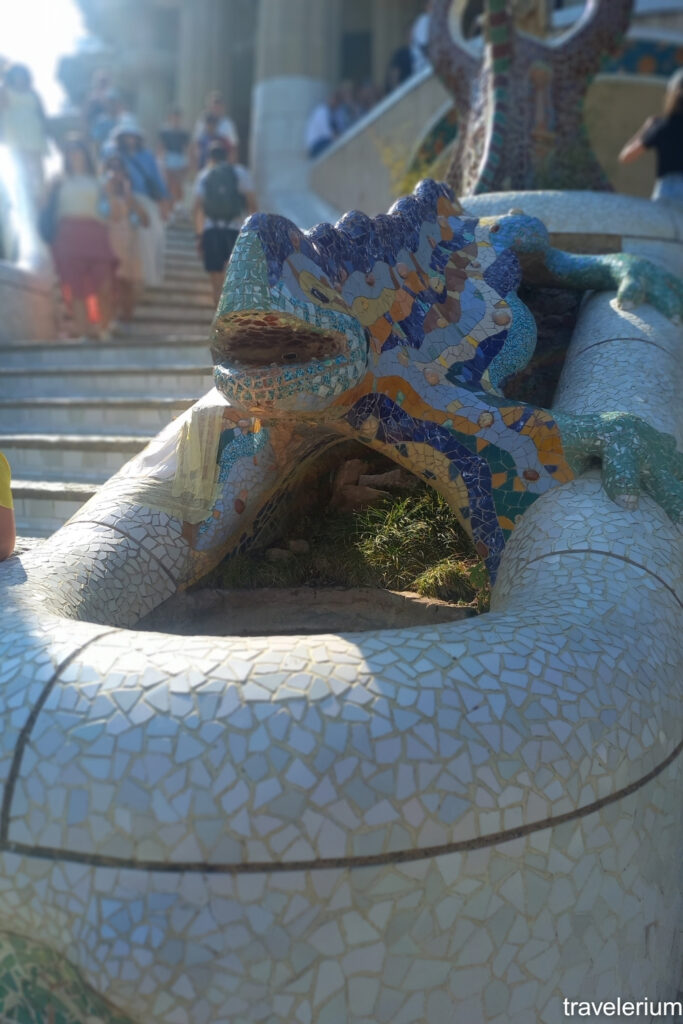
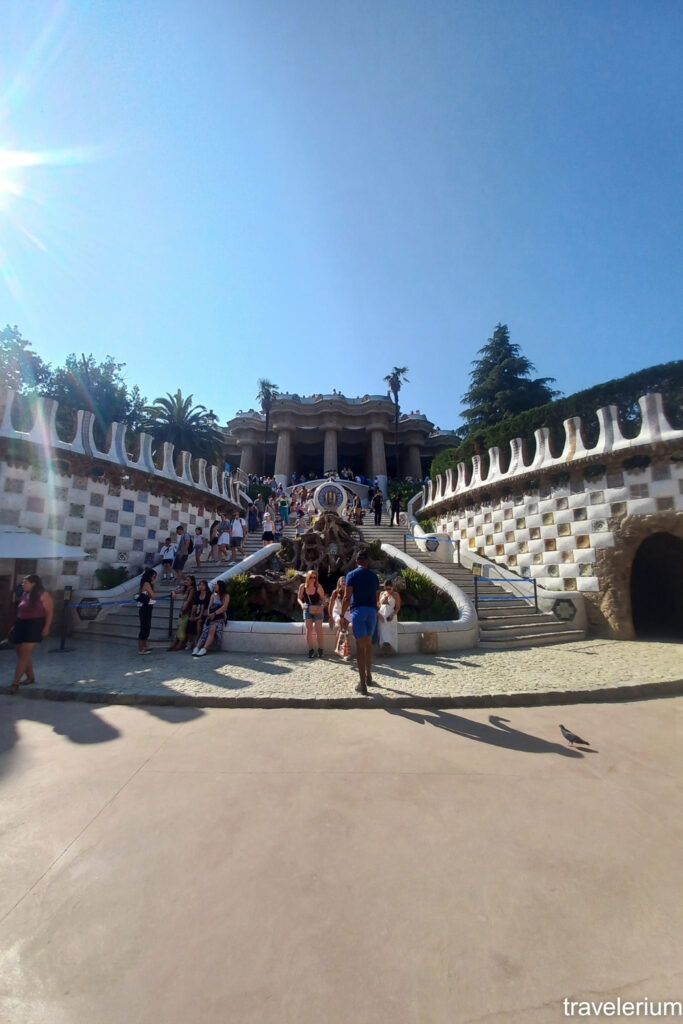
This iconic entrance stairway is Park Güell’s most photographed feature. The multi-colored mosaic salamander (often called a dragon) sits at the center of the staircase, created using Gaudí’s signature trencadís technique—broken ceramic pieces arranged into colorful mosaics.
The fountain-salamander originally functioned as a water drain for the park’s underground cistern, showcasing Gaudí’s blend of form and function. The staircase leads up through three distinct sections, each with fountain features decorated in medallions representing Catalan symbolism.
Photography tip: Arrive early to photograph the dragon without crowds. The best angle is from the bottom of the stairs looking up.
The Hypostyle Hall (Sala Hipóstila)
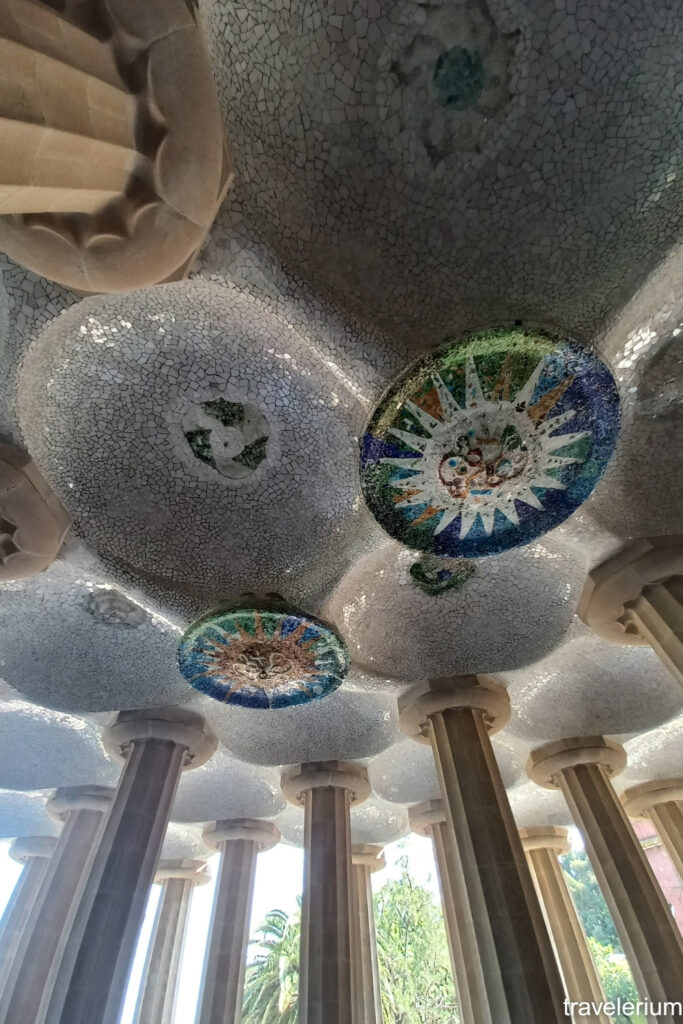
Originally designed as a marketplace for the housing development’s residents, this hall features 86 Doric columns creating a forest-like atmosphere. The ceiling showcases four circular mosaics created by Gaudí’s collaborator Josep Maria Jujol, along with decorative medallions incorporating recycled materials like bottles and ceramic fragments.
The columns aren’t merely decorative—they’re part of an ingenious drainage system, channeling rainwater from the plaza above to the cistern below.
Secret: Stand in the center and speak or clap—the acoustics create an impressive echo effect.
The Serpentine Bench (Banc de Trencadís)
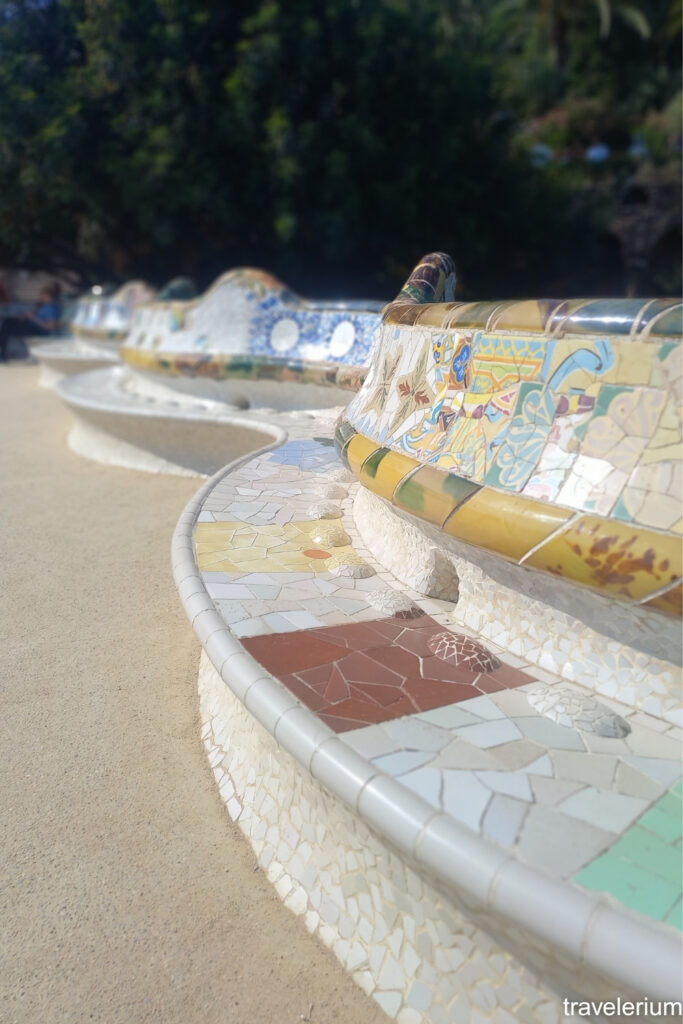
Undulating along the edge of the main plaza, this 110-meter-long bench is a masterpiece of collaborative art. While Gaudí designed the ergonomic shape (said to be modeled on a worker’s body), Josep Maria Jujol created the spectacular mosaic decoration using broken ceramic, glass, and found objects.
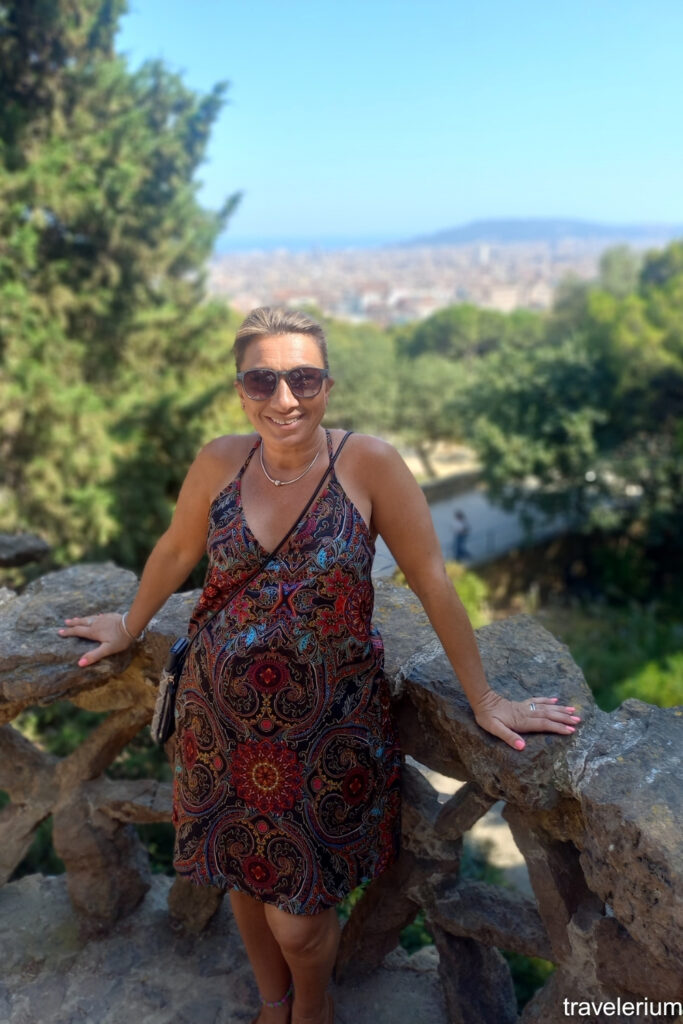
The bench’s wavy form provides natural dividers for intimate conversations while offering panoramic views of Barcelona and the Mediterranean Sea beyond.
Hidden detail: Look closely at the mosaics to spot messages, words, and even a wine bottle incorporated into the design.
The Austria Gardens
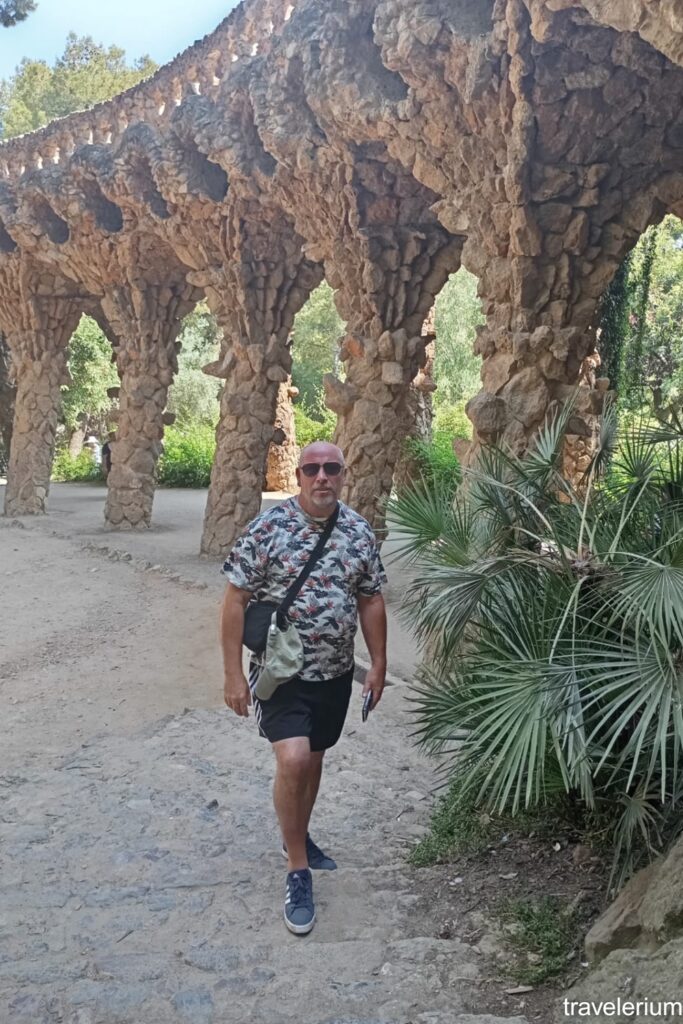
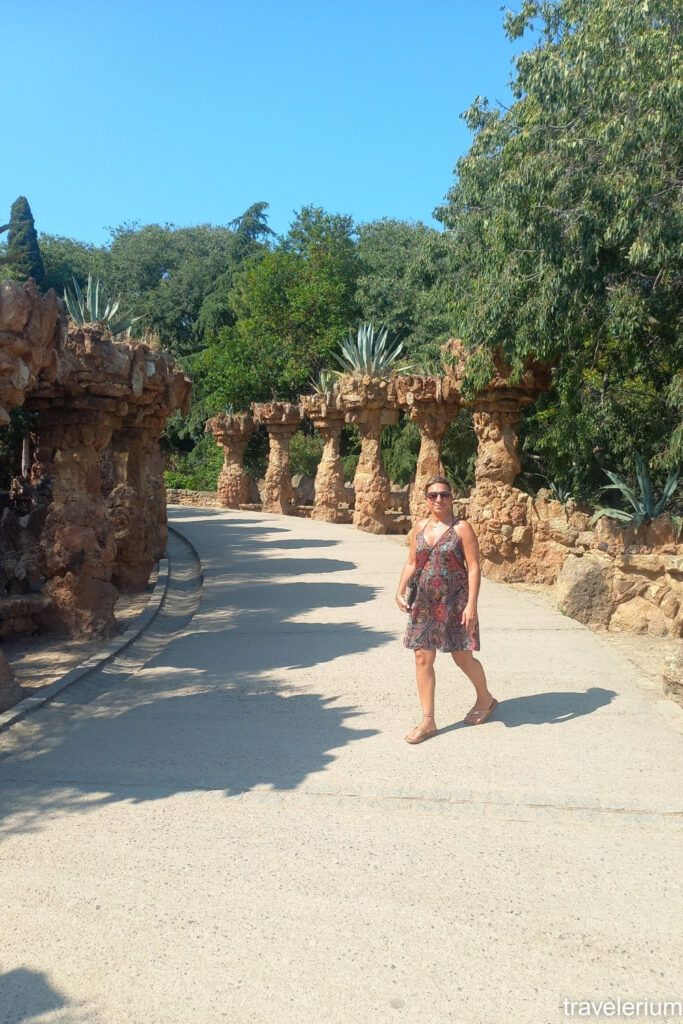
Located in the free-access area, these gardens occupy the former site of an Austrian-themed home. The viaducts here showcase Gaudí’s ability to integrate structures seamlessly with the natural landscape, using stone columns that resemble tree trunks and arches that follow organic curves.
Photography opportunity: The stone pathways and viaducts here are less crowded but equally photogenic as the Monumental Zone attractions.
The Porter’s Lodge Pavilions
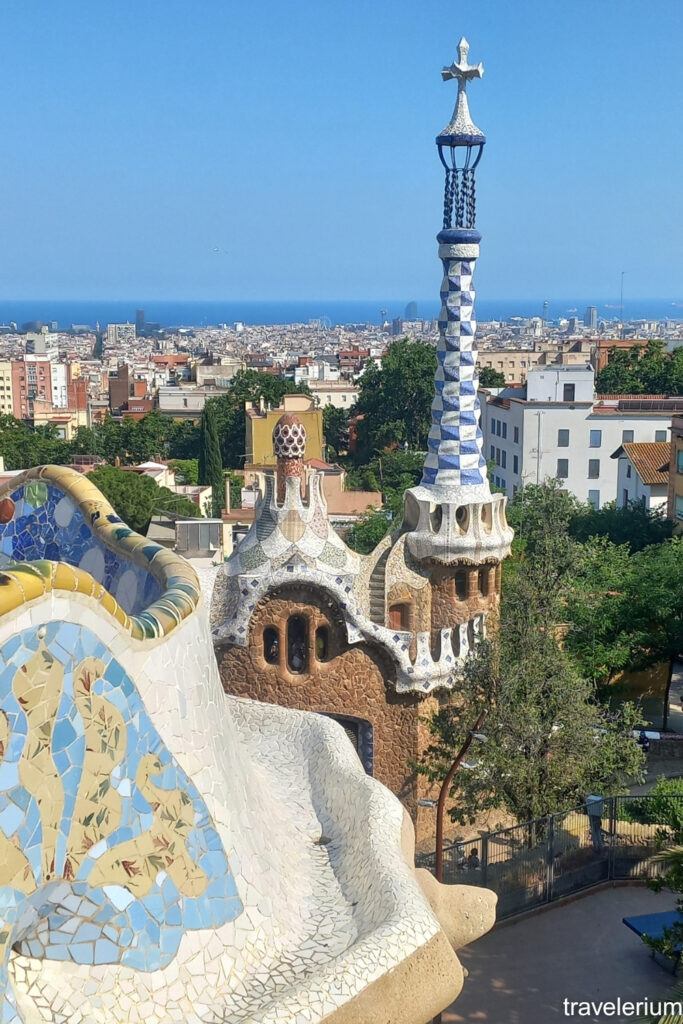
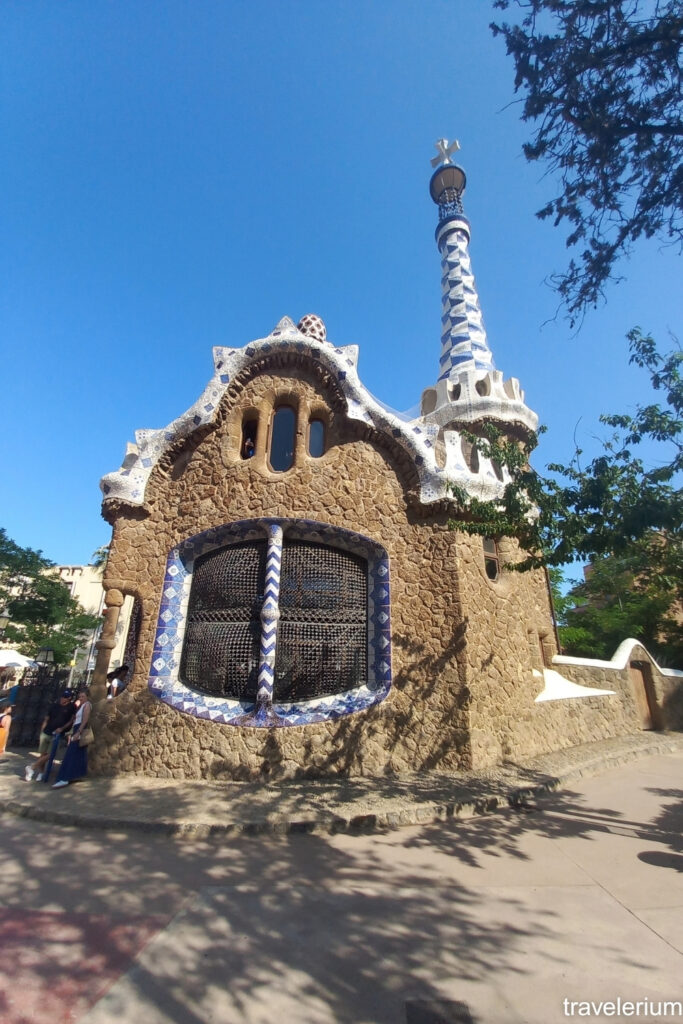
Two whimsical buildings flank the main entrance, originally designed as the development’s entrance pavilions. The right building served as the porter’s house, while the left housed administrative offices. Both feature Gaudí’s characteristic organic forms, with roofs that resemble mushrooms or meringues.
Today, one pavilion houses a gift shop and the other contains a small museum about the park’s history.
Casa Museu Gaudí
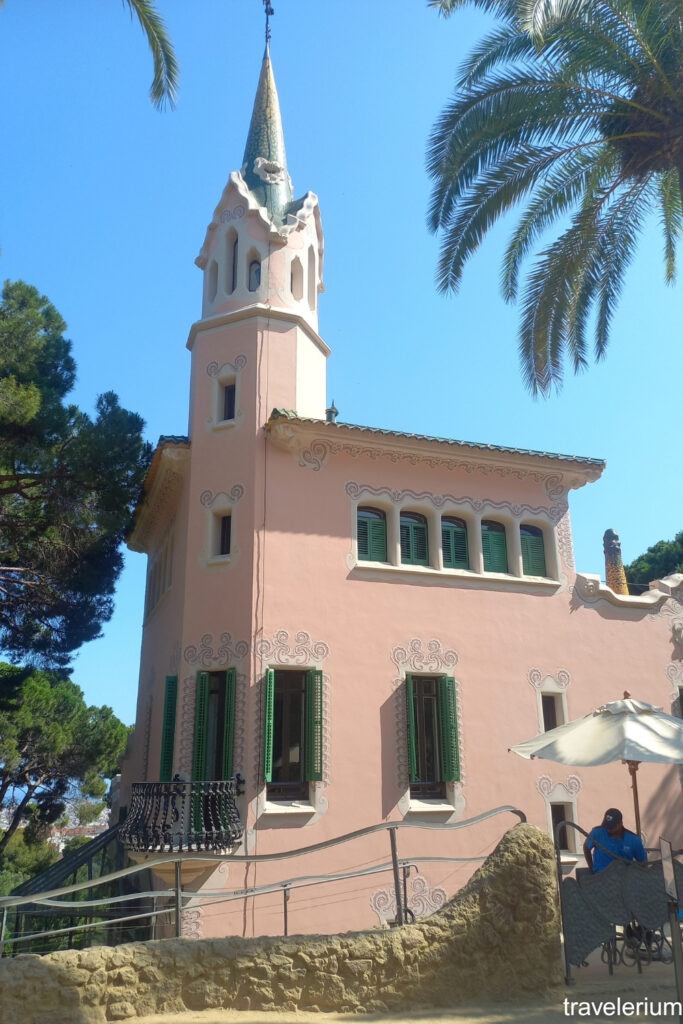
Though not designed by Gaudí himself (it was designed by Francesc Berenguer), this pink house was Gaudí’s home from 1906 to 1925. Now a museum, it displays furniture designed by Gaudí, personal objects, and works by his collaborators, offering intimate insights into the architect’s life.
Worth noting: This requires a separate ticket (or combined ticket) and is located outside the Monumental Zone.
Park Güell Tips: Making the Most of Your Visit
Before You Go
What to Bring:
- Comfortable walking shoes (essential—the park has many stairs and uneven surfaces)
- Water bottle (limited facilities inside the Monumental Zone)
- Sun protection (hat, sunscreen, sunglasses) especially April-October
- Light jacket (even in summer, mornings can be cool)
- Charged phone/camera for photos
- Backpack for carrying belongings (large bags may require security checks)
What to Wear:
- Comfortable, casual clothing
- Layers (temperature varies throughout the day)
- Sturdy shoes with good grip (avoid heels or flip-flops)
- Weather-appropriate gear (Barcelona can be rainy November-March)
During Your Visit
Time Management:
- Monumental Zone: Allow 1.5-2 hours minimum
- Full park exploration: 3-4 hours including free areas
- With Casa Museu Gaudí: Add 45-60 minutes
Remember, while your entry time is fixed, you can stay as long as you wish once inside.
Photography Tips:
- The dragon: Best photographed early morning or late afternoon
- Serpentine bench: Sunset provides magical lighting
- City views: Clearest in morning before afternoon haze develops
- Mosaic details: Cloudy days reduce glare for close-up shots
- Avoid harsh midday sun that creates strong shadows
Accessibility: Park Güell has challenging accessibility due to its hillside location. The Monumental Zone has:
- Limited wheelchair access (steep slopes and stairs are unavoidable)
- Accessible bathrooms
- Free entry for visitors with disabilities plus one companion
- Staff assistance available—contact in advance for special arrangements
Visitors with mobility limitations should carefully consider whether the physical demands match their abilities.
Facilities and Services
Restrooms:
- Located near the main entrance and at various points in the park
- Generally clean but can have queues during peak times
Food and Drink:
- Small café near the entrance (limited menu, premium prices)
- No food allowed in the Monumental Zone
- Better dining options in the Gràcia neighborhood nearby
Gift Shops:
- Located in the Porter’s Lodge building
- Features Gaudí-inspired souvenirs, books, and postcards
- Prices are higher than in downtown Barcelona shops
Guided Tours: Available in multiple languages, typically lasting 90 minutes. Options include:
- Official Park Güell guided tours (€25-30)
- Private tours (€100+ depending on group size)
- Audio guides (€5, available at entrance)
Many visitors find the park self-explanatory with a good guidebook, making paid tours optional.
Secrets and Hidden Gems of Park Güell
The Laundry Room Portico
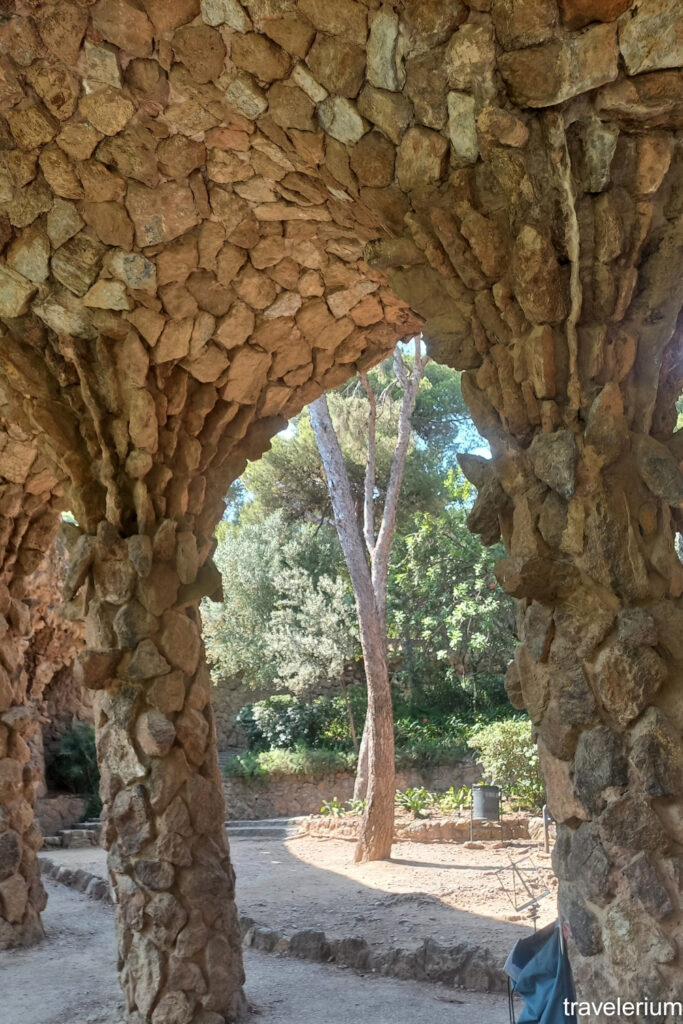
Most visitors miss this vaulted corridor in the free-access area, featuring slanted columns that create a dramatic covered walkway. Gaudí designed these tilted supports to better distribute weight—an engineering solution that creates unexpected beauty.
The Calvary Monument
At the park’s highest point stands a stone monument with three crosses. This spot offers the best panoramic views of Barcelona and is significantly less crowded than the main plaza. The surrounding rocks feature natural cave-like formations that Gaudí incorporated into his design philosophy.
How to find it: Follow the paths upward from the main plaza—signs point to “Turó de les Tres Creus” (Hill of the Three Crosses).
The Washerwoman’s Shelter
Hidden within the viaducts, this small shelter demonstrates Gaudí’s attention to social details. He designed protected areas where workers and washerwomen could rest, showing his concern for all classes of society.
The Enigmatic Columns
Throughout the park, columns lean at seemingly impossible angles. Gaudí calculated these precise tilts to follow the natural lines of force, making them stronger than vertical columns despite appearing precarious. This technique anticipated modern architectural engineering by decades.
The Hidden Messages
Look closely at the mosaic work throughout the park to discover:
- Religious symbols woven into decorative patterns
- The word “Park” spelled in the entrance medallion
- Broken bottles, cups, and dolls incorporated into mosaics
- Hand prints and signatures of workers in the ceramic work
The Sound of Water
The dragon fountain, when operational, produces a specific musical sound as water flows through the hollow sculpture. Gaudí designed it to create this acoustic effect, though water flow is now limited to preserve the structure.
Combining Park Güell with Other Attractions
Half-Day Itinerary
Morning:
- 8:00 AM: Arrive at Park Güell (early entry time)
- 8:00-10:30 AM: Explore the Monumental Zone and free areas
- 11:00 AM: Walk down to Gràcia neighborhood
- 11:30 AM-1:00 PM: Explore Gràcia’s plazas, shops, and cafés
Alternative:
- Visit Casa Museu Gaudí after the main park
- Continue to Bunkers del Carmel for sunset views (15-minute walk from Park Güell)
Full-Day Gaudí Route
Combine Park Güell with Barcelona’s other Gaudí masterpieces:
Morning:
- 9:00 AM: Park Güell
- 11:30 AM: Travel to Sagrada Família (30 minutes by metro)
Afternoon:
- 12:30 PM: Sagrada Família tour (book tickets in advance)
- 2:30 PM: Lunch break
- 4:00 PM: Casa Batlló or La Pedrera on Passeig de Gràcia
Ticket packages: Barcelona offers combined Gaudí passes that include multiple sites at discounted rates.
Nearby Attractions
Bunkers del Carmel (Turó de la Rovira):
- Distance: 15-minute walk from Park Güell
- Free entry
- Spanish Civil War ruins with 360-degree Barcelona views
- Best visited at sunset
- Bring water—it’s a steep climb
Gràcia Neighborhood:
- Distance: At the bottom of the park hill
- Charming squares (Plaça del Sol, Plaça de la Virreina)
- Local restaurants and cafés with better prices than tourist areas
- Vintage shops and independent boutiques
- Authentic Barcelona neighborhood atmosphere
Hospital de Sant Pau:
- Distance: 20 minutes by metro
- UNESCO World Heritage Site
- Modernist hospital complex by Lluís Domènech i Montaner
- Less crowded than Gaudí sites
- Combined tickets sometimes available
Common Mistakes to Avoid When Visiting Park Güell
1. Not Booking Tickets in Advance
The most common error. The park sells out regularly, especially during peak season (April-October). Without advance tickets, you might be turned away or face long waits.
Solution: Book online at least 2-3 days ahead, longer during summer.
2. Arriving Late for Your Time Slot
Your ticket specifies a 30-minute entry window. Late arrivals may not be admitted.
Solution: Arrive 10-15 minutes early to account for entrance queues and security checks.
3. Wearing Inappropriate Footwear
The park has numerous stairs, slopes, and uneven surfaces. Heels, flip-flops, or unsupportive shoes make the visit uncomfortable and potentially dangerous.
Solution: Wear comfortable walking shoes or sneakers with good grip.
4. Underestimating the Walk from Metro Stations
All metro stations require a significant uphill walk (15-20 minutes minimum), which surprises many visitors.
Solution: Take bus H6, a taxi, or allow extra time for the walk. Consider your fitness level.
5. Visiting Only the Monumental Zone
Many visitors miss the beautiful free areas, which comprise 90% of the park and offer equally impressive views and architecture.
Solution: Allow time to explore the viaducts, gardens, and viewpoints in the free-access sections.
6. Going at Midday in Summer
Peak hours (12:00-2:00 PM) in summer mean intense heat, harsh sunlight for photos, and maximum crowds.
Solution: Book early morning or late afternoon slots for better conditions.
7. Not Bringing Water or Sun Protection
Limited facilities inside the Monumental Zone mean you can’t easily buy water, and Barcelona’s sun is intense most of the year.
Solution: Bring a water bottle, hat, and sunscreen, especially May-September.
8. Expecting Full Accessibility
The park’s hillside location and historic design make it challenging for wheelchairs, strollers, and visitors with mobility limitations.
Solution: Research accessibility in advance and contact park staff about specific needs.
Practical Park Güell Guide: Frequently Asked Questions
- How long should I spend at Park Güell? Minimum 1.5-2 hours for the Monumental Zone; 3-4 hours to explore the entire park thoroughly. Photography enthusiasts may want even longer.
- Is Park Güell worth visiting? Absolutely. It’s one of Barcelona’s most unique attractions, offering Gaudí’s architectural genius in a park setting rather than a building interior. The views alone justify the visit.
- Can I visit Park Güell for free? The free-access areas (about 90% of the park) offer beautiful views and architecture, but you’ll miss the iconic dragon, serpentine bench, and Hypostyle Hall, which are in the ticketed Monumental Zone.
- Is Park Güell suitable for children? Yes, children enjoy the colorful mosaics and whimsical architecture. However, parents should monitor young children carefully—there are many stairs and drops without barriers. Children 0-6 enter free; ages 7-12 receive discounted tickets.
- What’s the best time of year for visiting Park Güell? Spring (April-May) and fall (September-October) offer the best balance of pleasant weather, manageable crowds, and good lighting for photography.
- How early should I book tickets? During peak season (April-October): 2-3 days minimum, preferably a week or more. Summer months (June-August): book 1-2 weeks ahead. Winter: 1-2 days is usually sufficient.
- Can I leave and re-enter the Monumental Zone? No, tickets are valid for one entry only. Once you exit the Monumental Zone, you cannot re-enter without purchasing another ticket.
- Are there lockers or storage facilities? No, the park doesn’t offer luggage storage. Avoid bringing large bags; small backpacks and purses are fine but may be subject to security checks.
- Is there a dress code? No formal dress code exists, but wear comfortable, practical clothing suitable for walking and climbing stairs. Avoid overly revealing clothing out of respect for other visitors.
- Can I bring food and drinks? Small snacks and water are permitted, but picnicking in the Monumental Zone is discouraged. The free-access areas have better spots for eating.
Understanding Gaudí’s Vision: Historical and Architectural Context
The Garden City Concept
Eusebi Güell, Gaudí’s patron and friend, envisioned creating Barcelona’s first garden city—a self-contained community combining the best of urban and rural living. Inspired by English garden cities, the plan included 60 triangular plots for houses, each with privacy and views.
The project failed commercially because it was too far from central Barcelona (at the time) and too expensive for most buyers. Only two houses were built, and in 1914, the project was abandoned. However, this “failure” gave Barcelona one of its most treasured public spaces.
Gaudí’s Architectural Innovations
- Trencadís Technique: Gaudí’s signature mosaic method using broken ceramic pieces wasn’t merely decorative—it was economical (using factory waste), durable, and allowed for curved surfaces impossible with regular tiles.
- Organic Architecture: Gaudí believed architecture should follow nature’s forms. The leaning columns mimic tree trunks, the viaducts suggest natural caves, and the serpentine bench flows like a wave.
- Functional Beauty: Every element serves a purpose. The Hypostyle Hall’s columns channel water; the dragon fountain drains the cistern; the covered walkways provide shade while supporting the terrace above.
- Integration with Landscape: Rather than imposing artificial structures, Gaudí worked with the hillside’s natural contours, creating architecture that seems to grow from the earth.
Symbolism Throughout the Park
- Religious Imagery: Despite being a residential development, Gaudí incorporated Christian symbols throughout—the Calvary monument, crosses hidden in decorative elements, and the serpent motif representing temptation.
- Catalan Identity: The park celebrates Catalan culture through symbols and colors. The four-armed cross represents Catalunya, and some historians suggest the serpentine bench’s curves outline a giant serpent, Catalunya’s heraldic symbol.
- Alchemical References: Some scholars identify alchemical and mystical symbols in the mosaics and architectural elements, reflecting Gaudí’s complex spiritual beliefs.
Seasonal Considerations for Visiting Park Güell
Spring (March-May)
Advantages:
- Mild temperatures (15-22°C/59-72°F)
- Blooming flowers throughout the gardens
- Manageable crowds (except Easter week)
- Clear skies for photography
Disadvantages:
- Occasional rain showers (bring umbrella)
- Easter week brings peak crowds
- Prices increase as high season begins
Summer (June-August)
Advantages:
- Longest opening hours (until 9:30 PM)
- Warm weather guaranteed
- Extended daylight for evening visits
Disadvantages:
- Peak crowds throughout
- Intense heat (30-35°C/86-95°F) at midday
- Highest ticket prices
- Hazy atmosphere can reduce view clarity
- Advanced booking essential
Fall (September-November)
Advantages:
- Beautiful golden light for photography
- Comfortable temperatures (18-24°C/64-75°F in September)
- Thinning crowds after mid-September
- Autumn colors in gardens
Disadvantages:
- Increasing rainfall in November
- Shorter days mean less visiting time
- Some facilities may reduce hours
Winter (December-February)
Advantages:
- Smallest crowds
- Lower ticket prices
- Clear, crisp air for views
- No heat issues
- Easy to book last-minute tickets
Disadvantages:
- Shorter opening hours (closes at 6:15 PM)
- Cold temperatures (8-15°C/46-59°F)
- Higher chance of rain
- Less colorful gardens
Final Tips for Your Park Güell Visit
Photography Enthusiasts:
- Bring a wide-angle lens for architecture
- Macro lens for mosaic details
- Visit at golden hour (first or last hour of opening)
- Cloudy days reduce harsh shadows on mosaics
- Arrive early to photograph the dragon without crowds
Budget Travelers:
- Book online to save money
- Explore free-access areas extensively
- Bring your own water and snacks
- Visit in winter for lower prices
- Skip paid guided tours (the park is self-explanatory)
Families with Children:
- Book early morning when kids are fresh
- Bring snacks and water
- Use the visit as a scavenger hunt (find the dragon, count columns, spot hidden animals)
- Take breaks in shaded areas
- Consider stroller accessibility—the park is challenging with a pram
First-Time Barcelona Visitors: Park Güell should definitely be on your itinerary, but prioritize based on your interests:
- Architecture lovers: Essential visit
- Photography enthusiasts: Must-see
- Limited time (1-2 days in Barcelona): Consider prioritizing Sagrada Família if you must choose
- Families: Great for all ages with proper preparation
- Mobility concerns: Carefully evaluate if it’s suitable for your needs
Making the Most of Your Park Güell Guide
Create Your Own Walking Route
While there’s no mandatory path through the Monumental Zone, this suggested route maximizes your experience:
Recommended 2-Hour Route:
- Main Entrance (15 minutes): Enter through the Porter’s Lodge pavilions, taking time to photograph these whimsical buildings and browse the gift shop.
- Dragon Staircase (20 minutes): Ascend the iconic staircase, stopping at each level to photograph the dragon/salamander fountain and admire the mosaic medallions. This is best done early before crowds accumulate.
- Hypostyle Hall (15 minutes): Walk through the forest of columns, look up at Jujol’s ceiling mosaics, and test the acoustics by standing in the center.
- Main Plaza and Serpentine Bench (30 minutes): Explore the undulating bench, find a spot to sit and enjoy Barcelona’s views, and photograph the intricate trencadís mosaics up close. Walk the entire length to appreciate different mosaic sections.
- Austrian Gardens and Viaducts (20 minutes): Descend to explore the covered walkways with their leaning columns and stone viaducts that blend seamlessly with nature.
- Free-Access Areas (20 minutes): Exit the Monumental Zone and explore the surrounding gardens, paths, and alternative viewpoints that most tourists skip.
For Extended Visits (3-4 Hours):
Add these experiences:
- Casa Museu Gaudí (45 minutes): If you have a combined ticket
- Calvary Monument (20 minutes): Hike to the highest point
- Hidden paths and gardens (30-45 minutes): Explore lesser-known viaducts and quiet corners
- Photography session (variable): Dedicated time for capturing details and experimenting with compositions
Document Your Visit
Essential Photos to Capture:
- The dragon fountain from bottom of staircase
- Hypostyle Hall columns from below
- Serpentine bench panorama
- Mosaic details (close-ups of trencadís work)
- Barcelona cityscape from the main plaza
- Porter’s Lodge pavilions
- Your group enjoying the bench
- Architectural details (columns, vaults, decorative elements)
Beyond Photography:
- Sketch favorite architectural details (bring a small notebook)
- Collect inspiration for your own creative projects
- Write reflections in a travel journal
- Create a video walking tour for memories
Respecting the Site
Park Güell is a UNESCO World Heritage Site that requires care and respect:
Do:
- Stay on designated paths
- Dispose of trash properly (bins are available)
- Speak at reasonable volumes
- Follow staff instructions
- Respect barriers and “do not enter” signs
- Be considerate when photographing (don’t block paths for extended periods)
- Supervise children closely
Don’t:
- Touch or climb on the historic structures
- Remove any materials (even broken tiles)
- Bring large groups without proper authorization
- Use professional photography equipment without permits
- Smoke in the Monumental Zone
- Bring pets (except service animals)
- Skateboard, bike, or roller-skate
- Feed pigeons or other birds
Weather Contingencies and Rainy Day Visiting
Barcelona enjoys a Mediterranean climate, but rain does occur, particularly November through March. Here’s how to handle visiting Park Güell in various weather conditions:
Rainy Day Strategies
Pros of visiting in rain:
- Significantly fewer crowds
- Mosaics appear more vibrant when wet
- Dramatic atmospheric photography opportunities
- You’ll have structures largely to yourself
What to bring:
- Compact umbrella
- Waterproof jacket
- Water-resistant shoes with good grip (surfaces become slippery)
- Plastic bag to protect camera/phone
- Microfiber cloth for lens cleaning
What to expect:
- Some areas may be temporarily closed for safety
- The Hypostyle Hall provides excellent rain shelter
- Covered walkways offer protected viewing
- Reduced visibility may impact city views
Hot Weather Strategies
Summer temperatures often exceed 30°C (86°F), making midday visits challenging:
Beat the heat:
- Book the earliest possible time slot (8:00 AM)
- Bring minimum 1 liter of water per person
- Wear light-colored, breathable clothing
- Apply sunscreen before arrival (SPF 30+)
- Seek shade in the Hypostyle Hall during peak heat
- Take frequent rest breaks on the serpentine bench
- Wear a hat and sunglasses
- Consider visiting late afternoon instead of midday
Wind Considerations
The exposed hilltop location can be surprisingly windy, especially in spring and fall:
Wind preparation:
- Bring a light jacket even on warm days
- Secure hats and loose items
- Be cautious with umbrellas in strong winds
- Protect cameras and electronics from blowing dust
Sustainability and Responsible Tourism
As Park Güell attracts over 3 million visitors annually, responsible tourism helps preserve this treasure for future generations.
Sustainable Visit Practices
Before your visit:
- Use public transportation instead of taxis when possible
- Book directly through official channels to avoid scalpers
- Choose off-peak times to reduce crowding pressure
- Research thoroughly to maximize your single visit (avoid repeat entries)
During your visit:
- Bring reusable water bottles
- Pack out all trash
- Support local businesses in Gràcia neighborhood rather than chain establishments
- Respect capacity limits (this is why timed entry exists)
- Follow all posted guidelines
After your visit:
- Share responsible tourism tips with others
- Post thoughtful reviews that help future visitors plan better
- Support Barcelona’s cultural preservation through donations if able
- Educate others about over-tourism challenges
Understanding Over-tourism Impact
Barcelona grapples with over-tourism, and Park Güell has been particularly affected. The 2013 introduction of tickets and visitor caps was a direct response to damage caused by excessive crowds.
How you can help:
- Visiting off-season (November-March) helps balance visitor distribution
- Exploring Barcelona’s lesser-known attractions reduces pressure on hotspots
- Spending time in the free-access areas gives the Monumental Zone periodic relief
- Respecting local residents’ quality of life (keep noise down when passing through residential areas)
Special Events and Unique Experiences
Occasional Special Programming
While not regular occurrences, Park Güell occasionally hosts:
- Concerts and Performances: The Hypostyle Hall’s acoustics make it occasionally available for special musical events, though these require separate tickets and advance booking.
- Night Visits: Rare special evening openings allow visitors to experience the park after dark with special lighting (typically during summer festivals).
- Educational Workshops: Architecture students and groups can sometimes arrange special educational sessions with extended access and expert guides.
- Photography Permits: Professional photographers and film crews can obtain special permits for commercial shoots, though these come with restrictions and fees.
Check the official Park Güell website before your visit to see if any special events coincide with your travel dates.
Beyond Park Güell: Continuing Your Gaudí Journey
If Park Güell captivates you, Barcelona offers numerous other Gaudí masterpieces:
Must-See Gaudí Sites
- Gaudí’s unfinished basilica and ultimate masterpiece
- Still under construction (estimated completion 2026-2030)
- Book tickets weeks in advance
- Allow 2-3 hours minimum
- Located in Eixample district
- Stunning residential building on Passeig de Gràcia
- Completely renovated interior
- Advanced audio-visual tour included
- More expensive but worth it for architecture enthusiasts
- Central location, easily combined with shopping
La Pedrera (Casa Milà):
- Another Passeig de Gràcia masterpiece
- Featuring an incredible undulating rooftop
- Often less crowded than Casa Batlló
- Evening concerts sometimes available
- Combination tickets with Park Güell available
Casa Vicens:
- Gaudí’s first major commission
- Recently opened to public (2017)
- Smaller, less crowded
- Displays Gaudí’s early Moorish influences
- Located near Park Güell (20 minutes by metro)
Palau Güell:
- Eusebi Güell’s city mansion
- Near Las Ramblas
- Showcases Gaudí’s interior design genius
- Often overlooked by tourists
- More intimate experience than larger sites
Lesser-Known Gaudí Works
For dedicated enthusiasts:
- Colònia Güell: Industrial town outside Barcelona with Gaudí’s crypt
- Casa Calvet: Residential building (exterior only, now a restaurant)
- Bellesguard Tower: Neo-Gothic villa with city views
- Park Güell gates at Finca Miralles: Only the entrance remains
Conclusion: Your Complete Park Güell Experience
Park Güell represents much more than a tourist attraction—it’s a testament to artistic vision, innovative engineering, and the beautiful accidents that sometimes occur when grand plans don’t work out as intended. What began as a failed luxury housing development became one of the world’s most beloved public parks and a UNESCO World Heritage Site.
This complete Park Güell guide has equipped you with everything needed for a successful visit: from booking tickets and choosing the best time to visit, to finding hidden secrets and understanding Gaudí’s architectural philosophy. Whether you’re an architecture enthusiast, photography lover, or simply someone seeking Barcelona’s most unique views, Park Güell delivers an unforgettable experience.
Key Takeaways:
- Book tickets online in advance to guarantee entry and save money
- Arrive early for the best experience with fewer crowds and better lighting
- Wear comfortable shoes and prepare for significant walking and stairs
- Explore beyond the Monumental Zone to discover the park’s full beauty
- Allow 2-4 hours depending on your interests and pace
- Visit during shoulder seasons (April-May, September-October) for optimal conditions
The magic of visiting Park Güell lies not just in seeing Gaudí’s famous dragon or walking the serpentine bench, but in understanding how his vision transformed a Barcelona hillside into an organic masterpiece where architecture and nature become one. As you wander through the tilted columns, gaze at the mosaic-covered surfaces, and take in Barcelona’s views from the main terrace, you’ll understand why Gaudí remains one of history’s most innovative architects.
Plan your visit wisely using these Park Güell tips, respect the site and local community, and allow yourself to be transported into Gaudí’s whimsical world where imagination and engineering merge into something truly extraordinary. Your Park Güell experience will undoubtedly become one of your most cherished Barcelona memories.