
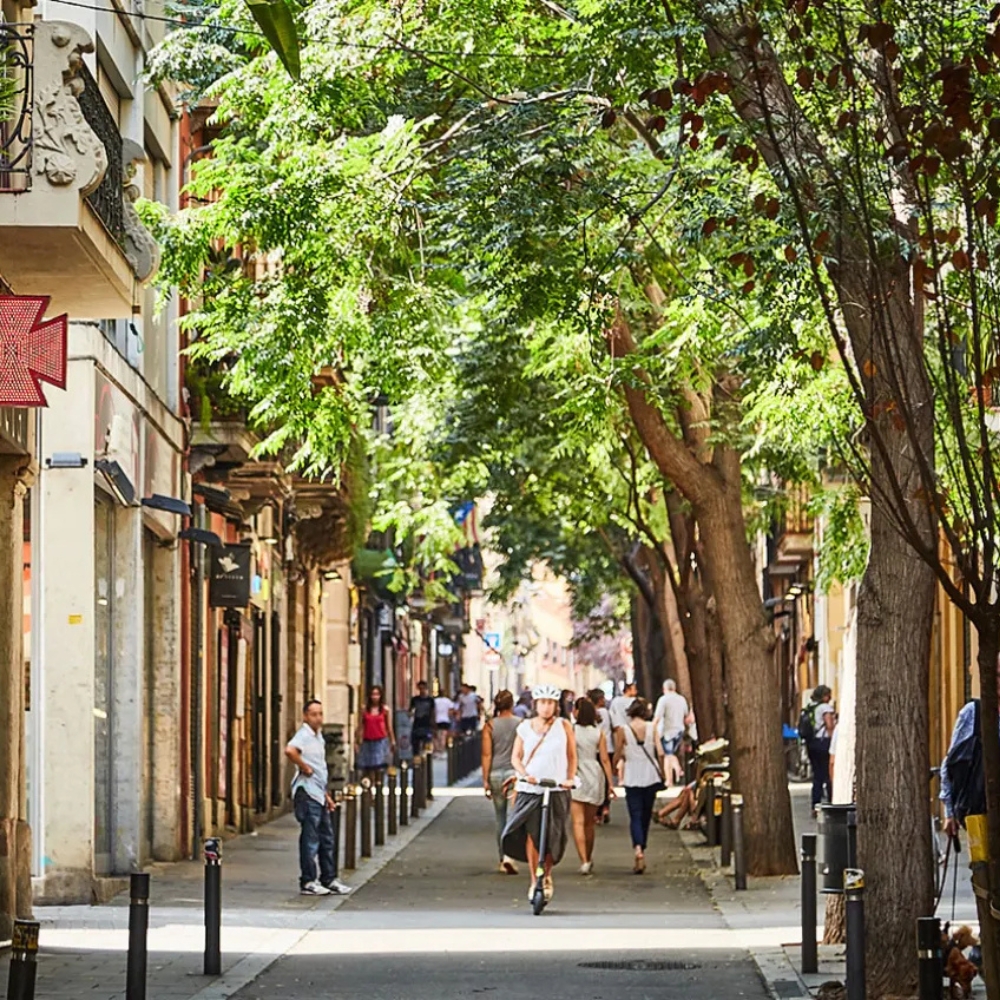
Gràcia stands apart from Barcelona’s tourist-heavy districts as a fiercely independent neighborhood where authentic local life persists alongside carefully managed tourism. Located just north of the city center, this former village maintains distinct identity through vibrant plazas, narrow streets, community traditions, and a bohemian spirit that has defined it for generations.
Unlike Las Ramblas or the Gothic Quarter, Gràcia functions primarily as a residential neighborhood where people live, work, and raise families. Visitors experience not a preserved historical district but a living community where daily routines and neighborhood traditions create the atmosphere. This authenticity makes Gràcia essential for understanding Barcelona beyond its famous monuments.
The neighborhood’s compact size (roughly 1.5 kilometers across) makes it walkable, while excellent metro connections ensure easy access. Most visitors come for Park Güell, Gaudí’s whimsical masterpiece, but those who linger discover charming plazas, excellent restaurants, lively markets, and the August festival Festa Major de Gràcia, when residents transform entire streets into spectacular themed decorations.
Historical Background
Gràcia originated as an independent municipality separate from Barcelona, maintaining autonomy until 1897. This history fostered the fierce local identity and community spirit that persist today. The neighborhood developed around agricultural lands and religious institutions, gradually transforming into a working-class industrial area during the 19th century.
The industrial revolution brought textile factories and workers, establishing Gràcia’s progressive political character. The neighborhood became known for labor organizing, republican politics, and resistance to centralized authority. Residents protested annexation into Barcelona, preferring independence, but the city’s expansion ultimately absorbed the municipality.
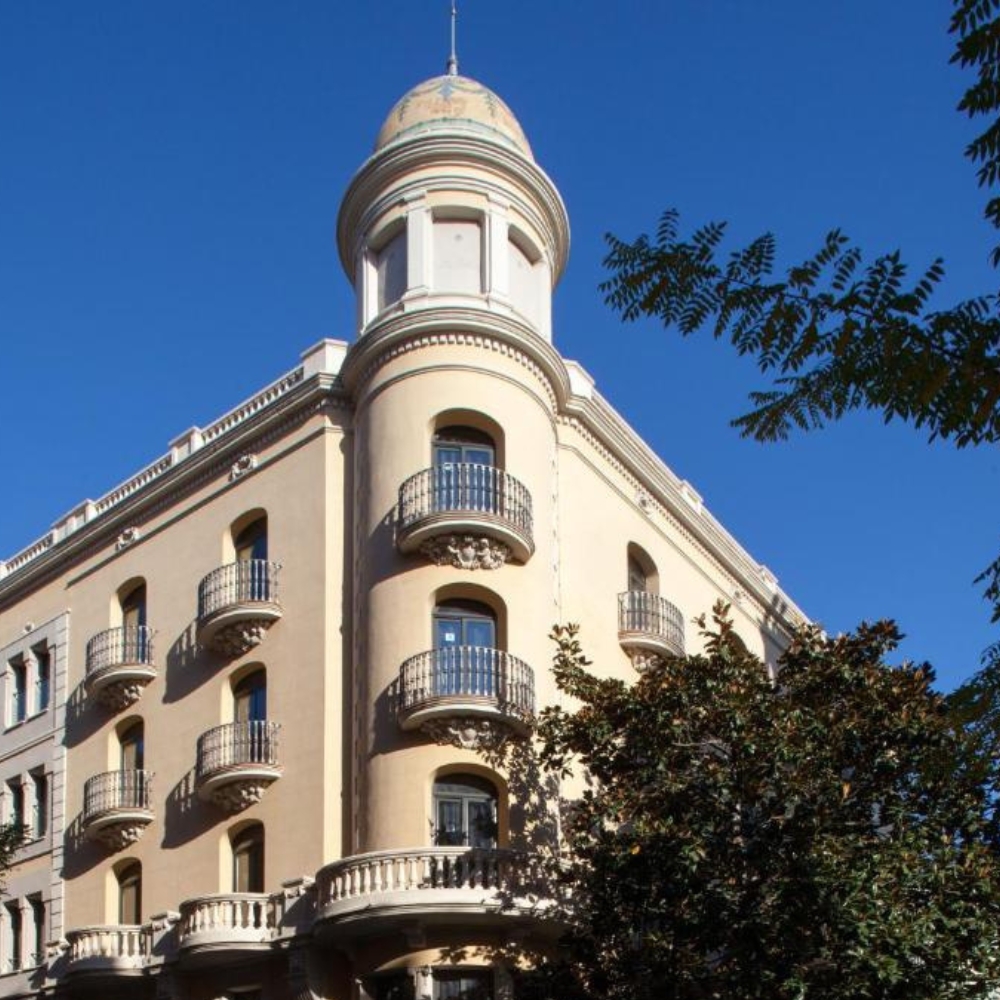
The late 19th and early 20th centuries saw significant architectural development, including Modernist buildings by prominent architects. Gràcia’s irregular medieval street pattern—inherited from its village origins—contrasts with Barcelona’s planned grid, creating distinctive urban character.
Throughout the 20th century, Gràcia maintained working-class character and progressive politics. During the Spanish Civil War, the neighborhood strongly supported the Republican cause. The Franco dictatorship suppressed Catalan culture and left-wing politics, but Gràcia remained a center of resistance. The return of democracy after Franco’s death allowed neighborhood traditions and political activism to flourish again.
Major Attractions
Park Güell
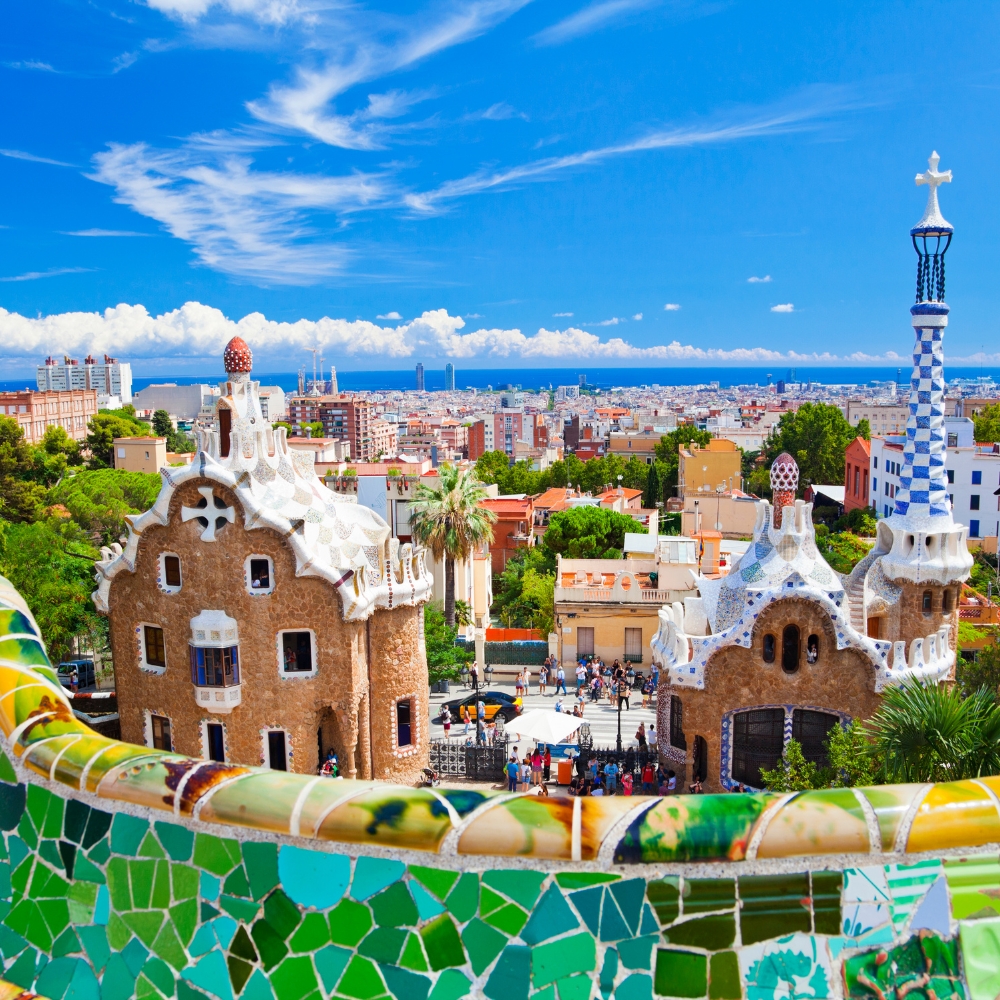
Park Güell dominates Gràcia’s tourist landscape, drawing millions of visitors annually to Gaudí’s extraordinary creation. Originally conceived as a housing development by Eusebi Güell and Antoni Gaudí, the project failed commercially but produced one of Barcelona’s most iconic spaces, combining architectural innovation, artistic decoration, and landscape design.
The most photographed element is the colorful mosaic lizard fountain on the main stairway. The serpentine bench on the main terrace, covered in broken tile mosaics (trencadís), offers panoramic Barcelona views while demonstrating Gaudí’s organic architectural approach. The columned hall beneath the terrace creates a forest of angled columns that challenge conventional architectural logic.
The park requires timed-entry tickets purchased in advance, especially during peak season. Early morning or late afternoon visits avoid crowds and provide better light. Free areas surrounding the monumental core allow exploration without tickets, though you’ll miss the most famous features.
Reaching Park Güell requires climbing—the neighborhood slopes upward significantly. Metro stations Lesseps or Vallcarca (both L3) provide access, followed by 15-20 minutes walking uphill. Buses serve entrances closer to the main gate. Comfortable shoes and reasonable fitness help, though the reward justifies the effort.
The Plazas of Gràcia
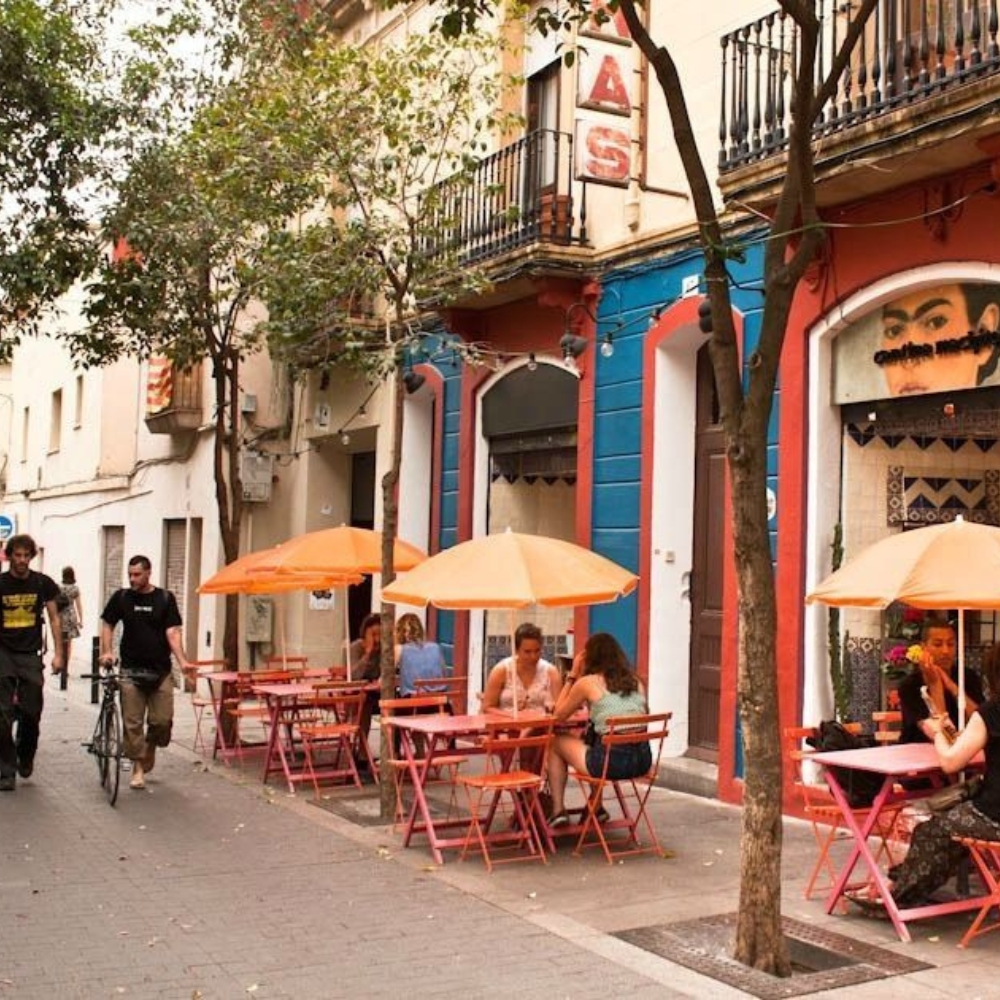
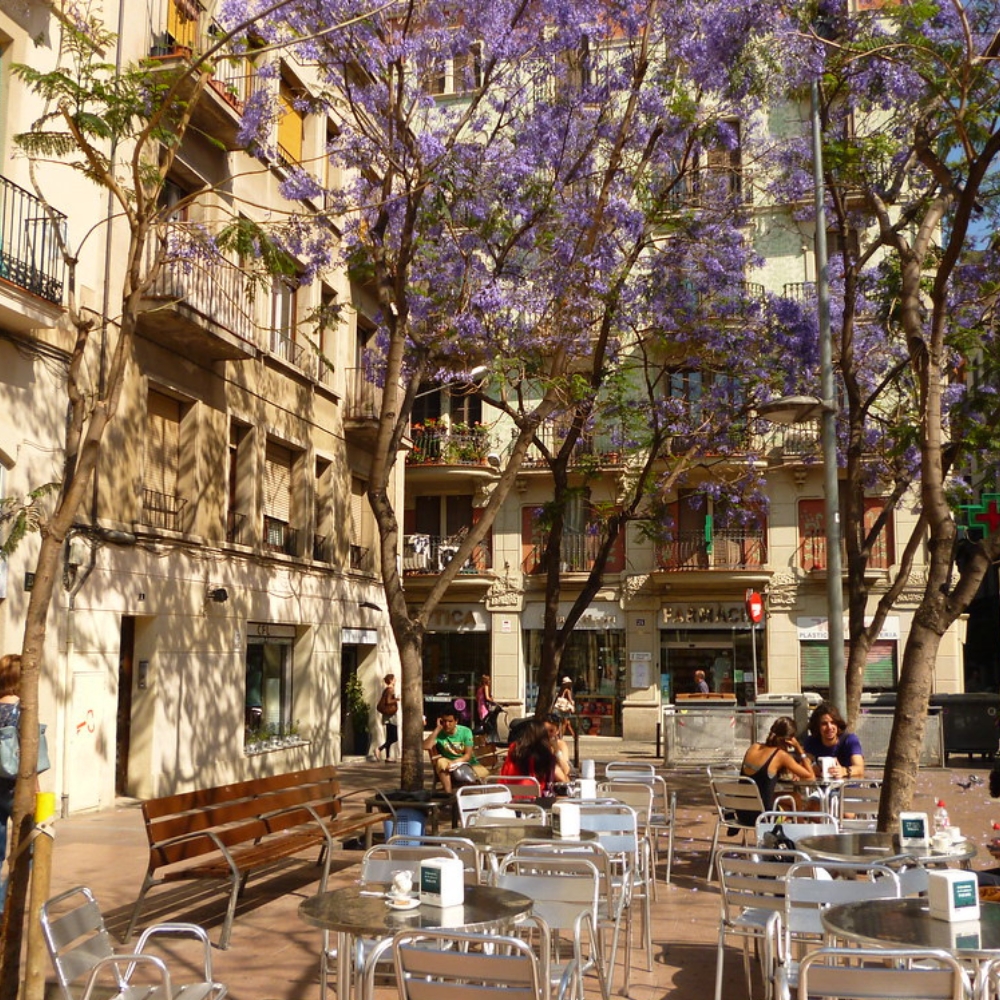
Gràcia’s identity centers on its numerous plazas, each with distinct character serving as community gathering spaces. These squares function as outdoor living rooms where neighbors socialize, children play, and café terraces support endless conversations.
- Plaça del Sol is Gràcia’s most famous square and the heart of nightlife. Surrounded by bars with outdoor seating, the plaza fills evenings and weekends with crowds enjoying Mediterranean street life. Late nights can be loud, but the energy exemplifies Gràcia’s character.
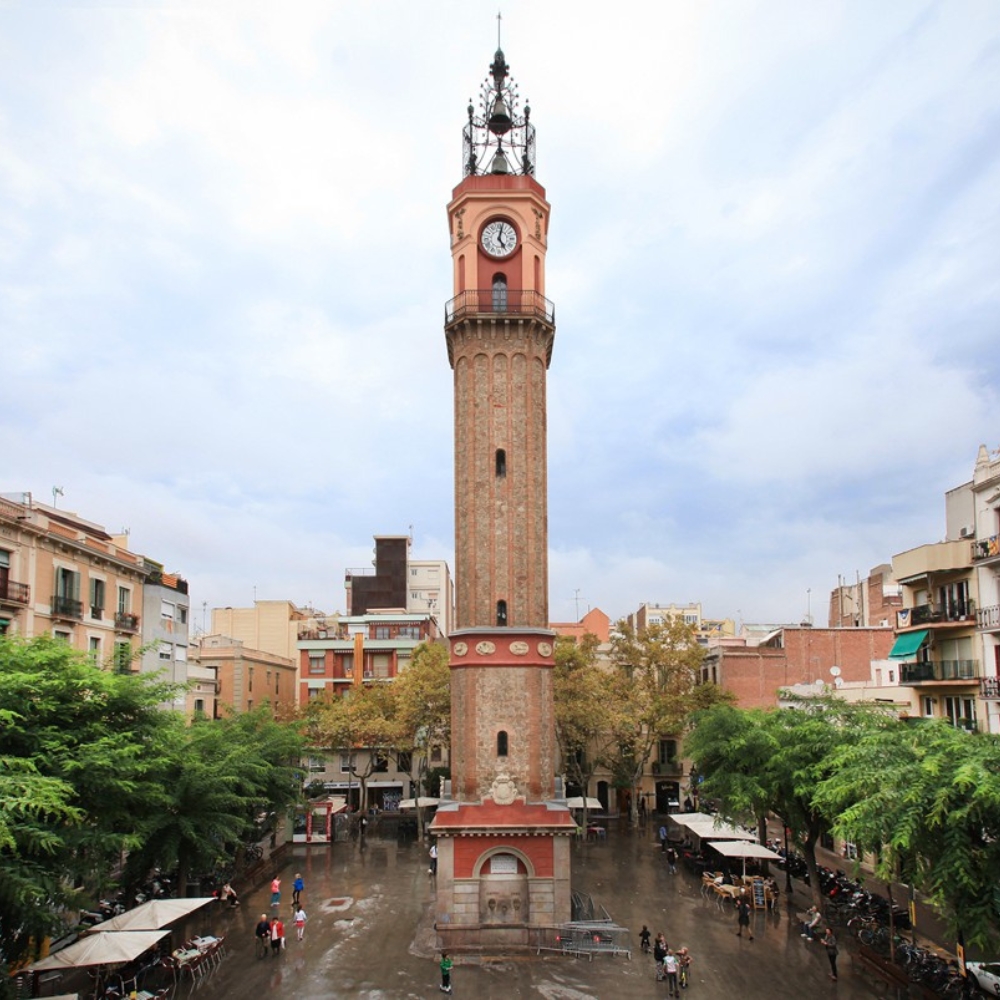
- Plaça de la Vila de Gràcia serves as the neighborhood’s civic center, featuring the clock tower (Torre del Rellotge) that symbolizes Gràcia. This 33-meter tower, built in 1862, represents the neighborhood’s former independence. The plaza hosts markets, demonstrations, and community events. Surrounding cafés offer pleasant spots for watching daily life unfold.
- Plaça de la Virreina maintains quieter, more residential character, with Sant Joan church dominating one side. The plaza’s trees provide shade for popular outdoor terraces, making it especially pleasant during summer.
- Plaça del Diamant gained literary fame through Mercè Rodoreda’s novel “La plaça del Diamant,” one of Catalan literature’s masterpieces. A sculpture commemorating the protagonist stands in the square. This more intimate plaza represents neighborhood life away from tourist attention.
Modernist Architecture
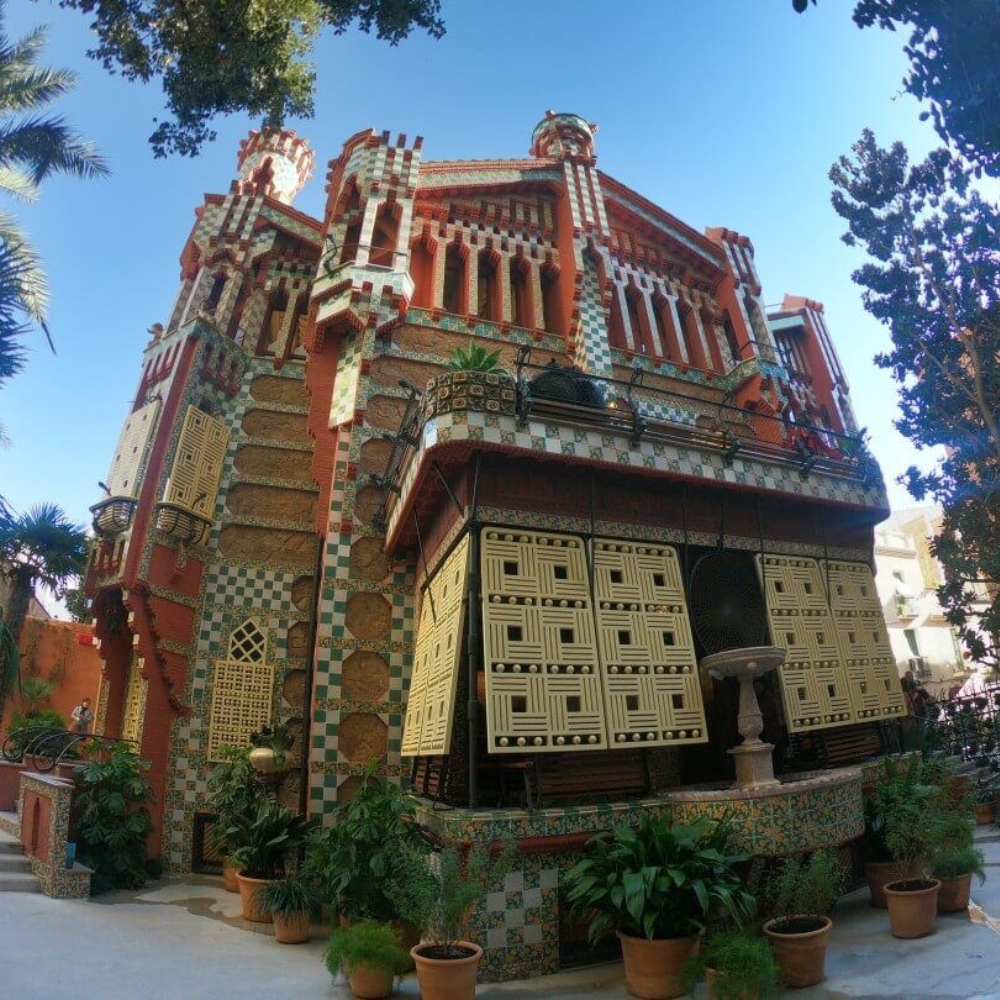
Casa Vicens, Gaudí’s first major commission (1883-1885), recently opened as a museum after extensive restoration. This private home showcases Gaudí’s early style, incorporating Mudéjar influences, colorful ceramic tiles, and the organic approach that would define his later work. Located on Carrer de les Carolines, it provides insight into Gaudí’s artistic development and Modernist design principles.
Several other Modernist buildings dot the neighborhood, though most remain private residences viewable only from the street, reflecting how Modernism transformed everyday buildings into artistic statements.
Cultural Life and Traditions
Festa Major de Gràcia
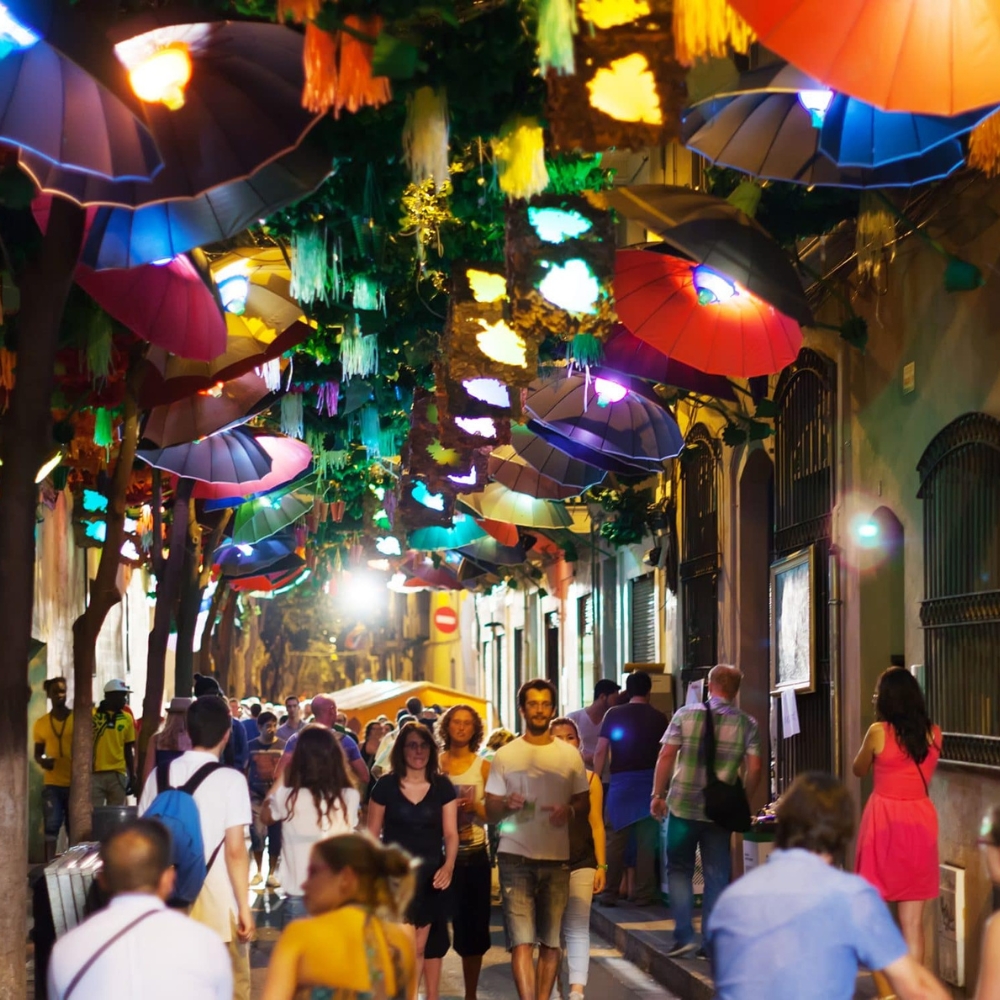
The Festa Major de Gràcia, held annually in mid-August (typically around August 15th), represents Barcelona’s most spectacular neighborhood festival. For this week-long celebration, residents of individual streets collaborate to transform their blocks into elaborately themed and decorated environments, competing for prizes.
The decorated streets employ recycled materials—paper, cardboard, plastic, fabric—transformed through collective effort into immersive environments. Themes range from underwater worlds to outer space, from tropical jungles to historical recreations. The creativity and scale astound first-time visitors. Entire facades disappear behind decorations, streets become tunnels of constructed scenery, and intersections feature elaborate sculptures.
Beyond decorated streets, the festival includes concerts, traditional dancing (sardanes), fireworks, children’s activities, and constant street life. The neighborhood essentially shuts down normal routines for the festival week.
Visiting during Festa Major means witnessing extraordinary cultural tradition but also encountering extreme crowds, intense noise, disrupted services, and a neighborhood functioning very differently than usual. Book accommodation far in advance if visiting during the festival.
Bohemian Identity and Community Spirit
Gràcia’s reputation as Barcelona’s bohemian quarter reflects historical reality. The neighborhood genuinely attracted artists, intellectuals, and political activists throughout the 20th century, drawn by affordable housing, tolerant atmosphere, and like-minded residents. This created cultural vibrancy—alternative theaters, artist studios, independent bookshops, political organizing spaces—that distinguished Gràcia from more bourgeois neighborhoods.
Contemporary Gràcia retains elements of this identity despite gentrification pressures. Independent businesses still outnumber chains, political activism remains visible, and residents maintain strong community consciousness. However, rising property values and tourist attention threaten the affordability that originally created bohemian character.
The neighborhood’s fierce local pride manifests in community organizing and defense of neighborhood character against development and tourism threats. Residents actively participate in neighborhood associations, protest harmful policies, and work to preserve what makes Gràcia distinctive.
Food and Drink
Catalan Cuisine and Dining
Gràcia offers excellent opportunities to experience Catalan cuisine, from traditional establishments to contemporary restaurants reimagining regional traditions. Key dishes include pa amb tomàquet (bread with tomato), escalivada (roasted vegetables), suquet de peix (fish stew), and preparations showcasing Mediterranean ingredients—olive oil, garlic, seafood, seasonal vegetables.
Tapas culture thrives throughout the neighborhood. Bars serve small plates ranging from classic Spanish tapas (patatas bravas, croquetas, jamón ibérico) to Catalan specialties. The practice of moving between bars, having drinks and tapas at multiple establishments, creates social dining experiences extending through entire evenings.
Dining schedules follow Spanish patterns: light breakfast, substantial lunch between 2:00-4:00 PM, and late dinner rarely before 9:00 PM. The menú del día (daily menu) at lunch provides three courses plus drink for €10-15, offering excellent value.
Cafés and Markets
Specialty coffee culture has established itself alongside traditional bars. Cafés like Satan’s Coffee Corner and Nømad Coffee serve carefully prepared coffee in minimalist spaces, coexisting with traditional bars where elderly residents drink quick cortados at the counter.
Brunch has found enthusiastic adoption in Gràcia. Weekend brunch at spots like Federal Café or Milk Bar & Bistro attracts crowds seeking eggs, avocado toast, and pancakes—dishes uncommon in traditional Catalan dining.
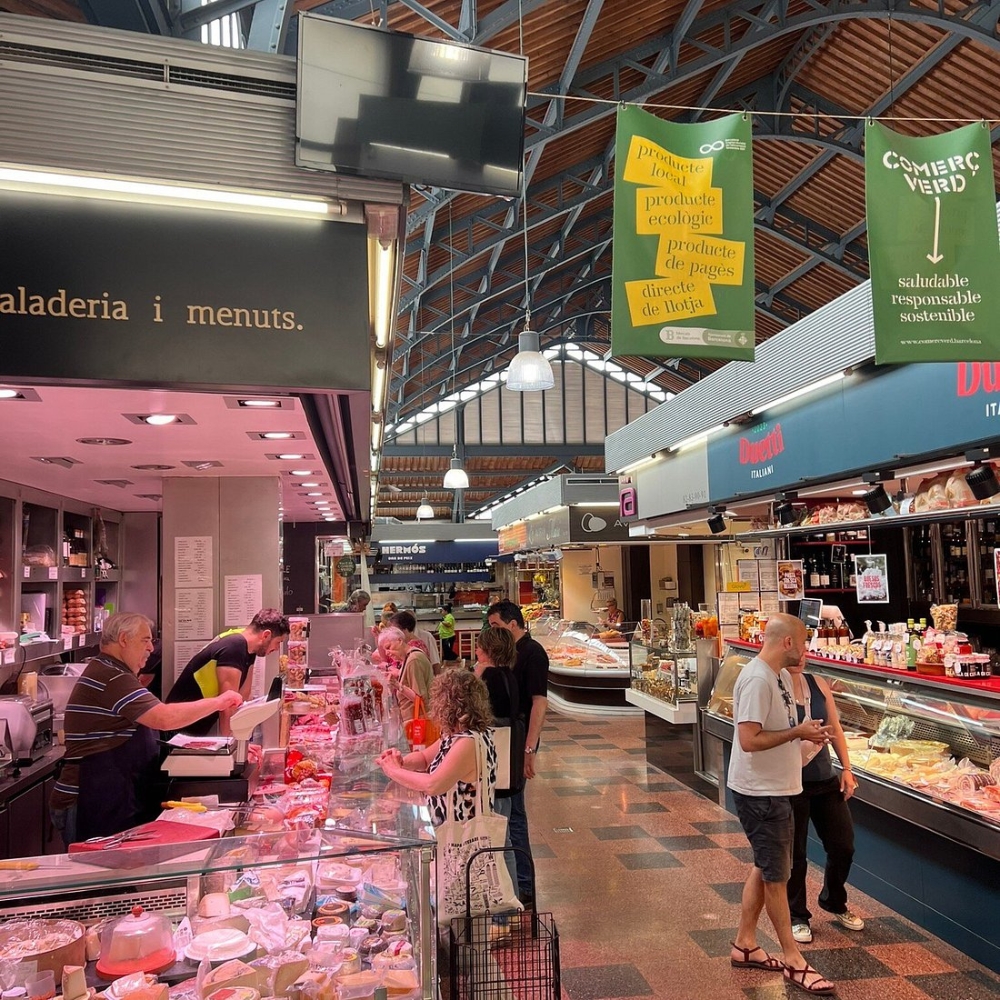
Mercat de la Llibertat, Gràcia’s main covered market, occupies a beautiful 1893 Modernist building housing dozens of specialized vendors. Fishmongers, butchers, produce sellers, and cheese vendors offer quality products with expert knowledge and personal service. The market also contains bars where vendors and shoppers take breaks, creating social spaces. These establishments serve traditional breakfasts and the vermouth hour before lunch—a social ritual involving fortified wine and snacks that has experienced renaissance.
Practical Information
Getting There and Around
Four metro stations serve Gràcia: Fontana (L3) at the southern edge, Lesseps (L3) in the north near Park Güell, Joanic (L4) serving eastern areas, and Diagonal (L3, L5) just south of the neighborhood. Once in Gràcia, walking becomes the primary mode—the neighborhood’s compact size makes everything accessible within 10-15 minutes on foot.
The terrain slopes upward from south to north, meaning walks toward Park Güell involve climbing steep streets. Buses provide additional options, and taxis are readily available. Parking is extremely difficult—visitors should rely on public transportation and walking rather than driving.
Where to Stay
Gràcia offers accommodation from boutique hotels to vacation rentals. Small hotels and guesthouses in renovated buildings provide comfortable mid-range options. Vacation rental apartments allow experiencing neighborhood life, though these have become controversial due to impacts on housing affordability.
Location significantly affects experience. Properties near Plaça del Sol mean potential nighttime noise. Accommodation near Fontana metro provides easy transportation. Quieter residential areas offer peaceful nights but require walking to commercial districts. Consider that Barcelona apartments tend to be smaller than North American standards, and air conditioning is essential for summer visits. To better understand how Gràcia compares to other parts of the city, it’s worth taking time to explore Barcelona’s districts before deciding where to base yourself.
Best Times to Visit
- Spring (March-May) and fall (September-November) offer ideal conditions—comfortable temperatures (15-23°C), moderate crowds, and pleasant walking weather. September combines summer warmth with decreasing crowds.
- Summer (June-August) brings peak tourism and intense heat, often exceeding 30°C. August features Festa Major—extraordinary if you want this experience, but requiring tolerance for extreme crowds and noise.
- Winter (December-February) sees fewest tourists and lowest prices but cooler, wetter weather (typically 10-15°C). Winter suits those prioritizing minimal crowds and budget over guaranteed weather.
Safety and Etiquette
Gràcia is generally safe. Petty theft, particularly pickpocketing in crowded metros, represents the most common concern. Keep valuables secure, use bags that close properly, and remain aware of surroundings. Bag snatching occasionally occurs at outdoor cafés—keep bags on your lap or secured to chairs.
- Violent crime against tourists is rare. Walking alone at night is generally safe with standard urban precautions. Emergency number 112 reaches police, medical, and fire services with English-speaking operators.
- Cultural etiquette: Basic Catalan phrases—”bon dia” (good morning), “si us plau” (please), “gràcies” (thank you)—demonstrate respect. Catalunya has two official languages, Catalan and Spanish, with complex political dimensions. Speaking Catalan receives enthusiastic appreciation. English is widely understood in tourist areas.
- The Catalan independence movement creates sensitivities—avoid making political pronouncements unless you deeply understand the issues. Respect political expressions whether you agree or not.
- Dining etiquette: Meals are social events not to be rushed. Waitstaff won’t bring the check until requested. Tipping 5-10% is appreciated but not obligatory, as service is included.
- Noise awareness matters—residents live above the bars and plazas where tourists gather. Keep voices moderate, particularly late at night.
- Photography: Ask permission before photographing recognizable people. Decorated streets during Festa Major are meant to be photographed, but residents deserve privacy.
Recommended Itineraries
Half-Day in Gràcia
Start at Fontana metro, walking up Carrer Gran de Gràcia to enter the historic core. Explore narrow streets around Plaça de la Vila de Gràcia, stopping for coffee at a plaza café. Visit Casa Vicens if interested in Gaudí’s early work. Walk to Mercat de la Llibertat to experience market atmosphere. Have vermouth and tapas at a traditional bar, then explore streets leading to Plaça del Sol. If time permits, walk up to Park Güell (advance tickets required), or simply wander residential streets discovering hidden corners.
Full Day in Gràcia
Begin early at Park Güell before crowds arrive (advance tickets required). Spend 2-3 hours exploring Gaudí’s masterpiece and enjoying panoramic views. Descend to the neighborhood for coffee and pastry at a specialty café. Visit Casa Vicens, then explore Plaça del Diamant and surrounding streets. Have menú del día lunch at a traditional restaurant (2:00-4:00 PM). Visit Mercat de la Llibertat for market atmosphere. Late afternoon, explore Plaça de la Virreina and Plaça del Sol, stopping for vermouth hour at a traditional bar. Evening, have dinner at a Catalan restaurant, then experience nightlife around Plaça del Sol or find live music at a neighborhood venue.
Weekend in Gràcia
Spread activities across two days for deeper immersion. Day one focuses on major attractions—Park Güell, Casa Vicens, principal plazas. Day two explores residential areas, markets, and local life rhythms. Attend vermouth hour, try multiple restaurants spanning traditional Catalan to contemporary fusion, experience both daytime plaza life and nighttime bar culture. If visiting during Festa Major, dedicate significant time to exploring decorated streets and festival activities. Consider a cooking class or market tour for deeper food culture engagement.
Essential Tips for Visitors
- Language: While many people speak English in tourist areas, learning basic Catalan phrases shows respect and opens interactions. “Bon dia” (good morning), “bona tarda” (good afternoon), “gràcies” (thank you), and “si us plau” (please) go a long way. Download a translation app for more complex situations.
- Money: Most establishments accept cards, but carry cash for small purchases at markets and traditional bars. ATMs are readily available throughout the neighborhood.
- Reservations: Popular restaurants require advance booking, especially for dinner on weekends. Book a few days ahead for mid-range restaurants, longer for high-end establishments.
- Siesta hours: Some smaller shops close 2:00-5:00 PM, particularly in summer. Plan shopping and market visits accordingly. Restaurants serve lunch until 4:00 PM, then close until dinner service begins around 8:00-9:00 PM.
- Dress code: Barcelona is casual but stylish. Avoid overly touristy clothing like fanny packs and athletic wear outside gyms. For restaurants, smart-casual works well—no need for formal attire except at high-end establishments.
- Water: Barcelona’s tap water is safe to drink. Carry a refillable water bottle to stay hydrated, especially in summer, and reduce plastic waste.
- Sustainability: Gràcia residents care about environmental issues. Use recycling bins properly (separate containers exist for different materials), avoid single-use plastics, and support businesses with sustainable practices.
What Makes Gràcia Special
Gràcia offers what’s increasingly rare in European tourist destinations: authentic neighborhood life continuing despite tourism pressures. Unlike districts transformed into open-air museums, Gràcia remains primarily a place where people live, work, and build community. Visitors enter as guests, experiencing Barcelona not as a collection of monuments but as a living urban society.
The neighborhood’s appeal lies in accumulated small moments that reveal how urban life can be lived well—neighbors chatting in plazas, daily market routines, casual bar culture where strangers become acquaintances. These ordinary activities create the social fabric making Gràcia meaningful.
Understanding Gràcia requires looking beyond surface charm to appreciate forces shaping neighborhood life—gentrification pressure, tourism impacts, political movements, economic changes. The decorated streets and charming plazas exist within this larger context of urban transformation affecting all desirable neighborhoods in global cities.
For visitors, Gràcia demonstrates how density creates vitality, how public space fosters community, how local commerce creates social infrastructure beyond economic transactions, and how festivals sustain collective identity across generations. These lessons have relevance wherever people seek livable cities that balance preservation and adaptation.
Experiencing Gràcia differs from checking off tourist attractions. While Park Güell merits inclusion in any Barcelona itinerary, Gràcia’s deeper value emerges from slower, less goal-oriented engagement—sitting in plazas watching life unfold, lingering over coffee, wandering without specific destination, allowing serendipitous encounters to shape your day. If you’re still in the planning stages, a complete Barcelona travel guide can help you understand how Gràcia fits within the broader city before you arrive.
Individual visitors can’t solve structural tensions around tourism’s impact, but conscious choices matter. Supporting local businesses over chains, respecting residential character, educating yourself about local issues, and behaving as a guest rather than an entitled consumer all contribute positively. Understanding Catalan culture, making effort with language, and appreciating political context allows more nuanced engagement than treating Barcelona as a generic European city.
Conclusion
What visitors can take from Gràcia extends beyond memories of pleasant meals and attractive streets. The neighborhood offers a model of urban life organized around community, culture, and human-scale spaces rather than purely around economic efficiency and commercial exploitation. Seeing this alternative in practice might influence how you think about your own community, what you advocate for locally, how you engage with neighbors, and what you value in urban life.
Gràcia’s gift is perspective—seeing how urban life can be organized differently than what many experience elsewhere, understanding that car-dominated, commercially homogenized, socially atomized urbanism isn’t inevitable, recognizing that alternatives exist and persist.
As you leave Gràcia, carry appreciation for the communities that create and sustain the places we visit. Behind every charming plaza and excellent restaurant stand generations of residents who built, maintained, and fought to preserve their neighborhood. The experience you enjoyed emerges from their ongoing efforts to sustain community against pressures constantly threatening to transform unique places into interchangeable commodities.
Gràcia continues evolving, as all living neighborhoods must. But if essential character survives—commitment to community, vibrant public life, cultural traditions, human scale, political engagement—then Gràcia will continue offering visitors and residents alike a glimpse of urban life at its best: dense but not oppressive, diverse but coherent, modern but rooted in tradition, welcoming to newcomers while maintaining distinct identity.
Whether you spend a few hours or several days in Gràcia, approach the neighborhood with curiosity, respect, and openness to experiencing Barcelona beyond the typical tourist path. Slow down, observe, engage, and allow this remarkable neighborhood to reveal itself on its own terms. The rewards—authentic connections, genuine experiences, and deeper understanding of what makes cities worth living in—far exceed what any guidebook can fully capture.