
La Rambla is arguably Barcelona’s most famous street. This iconic 1.2-kilometer pedestrian boulevard stretches from Plaça de Catalunya down to the Christopher Columbus Monument at Port Vell, cutting through the heart of the city’s historic center. With its street performers, flower stalls, and constant buzz of activity, La Rambla embodies the vibrant spirit of Barcelona and is simply a must-visit in Barcelona.
However, this popularity comes with a price. La Rambla has gained a reputation not just for its attractions, but also for pickpockets and tourist scams. But don’t let that scare you away—with the right knowledge and precautions, you can enjoy everything this legendary boulevard has to offer while keeping yourself and your belongings safe.
This comprehensive La Rambla guide will walk you through the best things to see, the scams you need to watch out for, and essential safety tips to make your visit memorable for all the right reasons.
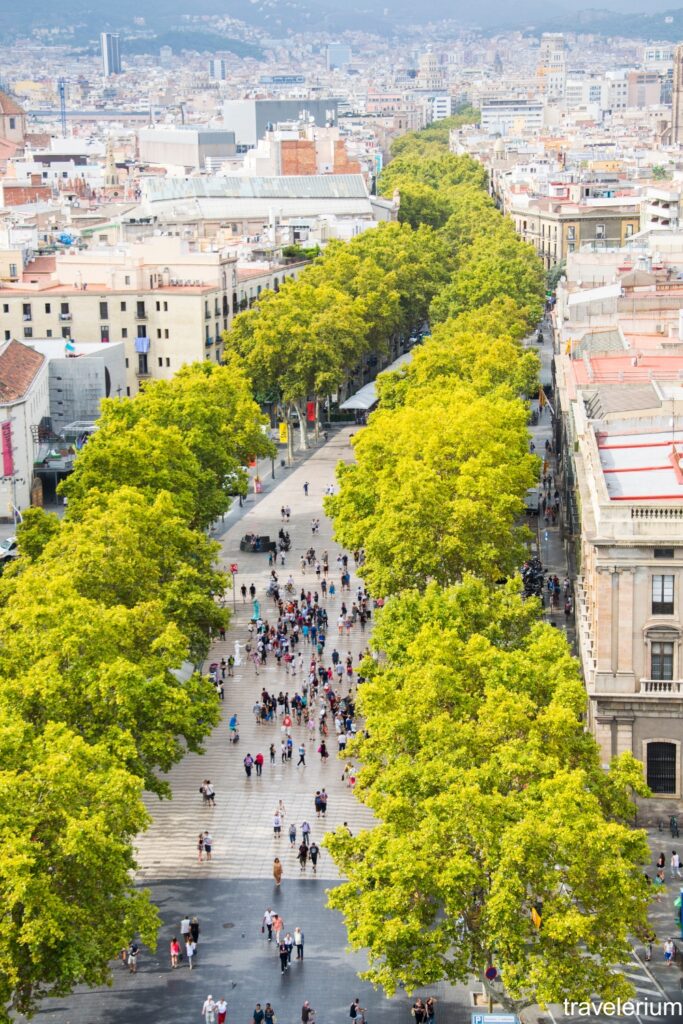
Understanding Las Ramblas: Five Streets in One
Before diving into what to see and how to stay safe, it’s helpful to understand that Las Ramblas isn’t actually a single street. The name is technically plural because it consists of five distinct sections, each with its own character:
- Rambla de Canaletes – The northern section near Plaça de Catalunya, home to the famous Canaletes fountain
- Rambla dels Estudis – Known historically for its bird market
- Rambla de Sant Josep (Rambla de les Flors) – The flower market section, the most colorful stretch
- Rambla dels Caputxins – The central section with the famous Liceu opera house
- Rambla de Santa Mònica – The southern end leading to the waterfront
Each section offers something different, and understanding this layout helps you navigate and appreciate the boulevard’s diversity.
Things to Do on La Rambla: The Must-See Attractions
La Boqueria Market
The Mercat de Sant Josep de la Boqueria, commonly known as La Boqueria, is one of Europe’s most spectacular food markets. Located roughly halfway down La Rambla, this market has been operating since 1217 (though the current structure dates to 1840).
Inside, you’ll find an overwhelming array of fresh produce, seafood, meats, cheeses, and prepared foods. The colorful displays of fruits and vegetables alone are worth the visit, but don’t miss the small tapas bars inside where you can sample fresh seafood, Spanish tortilla, and other local specialties.
Pro tip: Visit in the early morning (before 10 AM) or late afternoon (after 4 PM) to avoid the worst crowds. The market is closed on Sundays.
Gran Teatre del Liceu
Barcelona’s prestigious opera house has been a cultural landmark since 1847. Even if you’re not attending a performance, you can take guided tours that showcase the building’s stunning architecture, including its magnificent auditorium, the Hall of Mirrors, and the beautiful foyer.
Palau Güell
Just off La Rambla on Carrer Nou de la Rambla, this early Gaudí masterpiece is often overlooked by tourists rushing to see the Sagrada Familia or Park Güell. Built between 1886 and 1890 for industrial tycoon Eusebi Güell, this UNESCO World Heritage site showcases Gaudí’s genius in a more intimate setting. The rooftop with its distinctive chimneys is particularly spectacular.
Plaça Reial
Just a short detour from La Rambla, this elegant 19th-century square is surrounded by arcaded buildings housing restaurants, bars, and clubs. The palm trees, fountain, and Gaudí-designed lampposts create a Mediterranean atmosphere that’s particularly enchanting in the evening.
Font de Canaletes
At the top of La Rambla, near Plaça de Catalunya, you’ll find this modest-looking fountain with a big reputation. According to legend, anyone who drinks from the Font de Canaletes will fall in love with Barcelona and return to the city. It’s also where FC Barcelona fans gather to celebrate victories.
Mosaic by Joan Miró
Embedded in the pavement near the Liceu opera house, this colorful mosaic by the famous Catalan artist Joan Miró is easy to miss if you’re not looking for it. Created in 1976, it adds an unexpected splash of art to your stroll.
The Street Performers
La Rambla is famous for its human statues and street performers. From medieval knights to floating yogis, these living sculptures line the boulevard’s central promenade. While watching them is free, they expect tips if you take photos, especially close-ups.
Columbus Monument
At the southern end of La Rambla, this 60-meter-tall monument to Christopher Columbus has marked the waterfront since 1888. You can take an elevator to the top for panoramic views of the city and harbor.
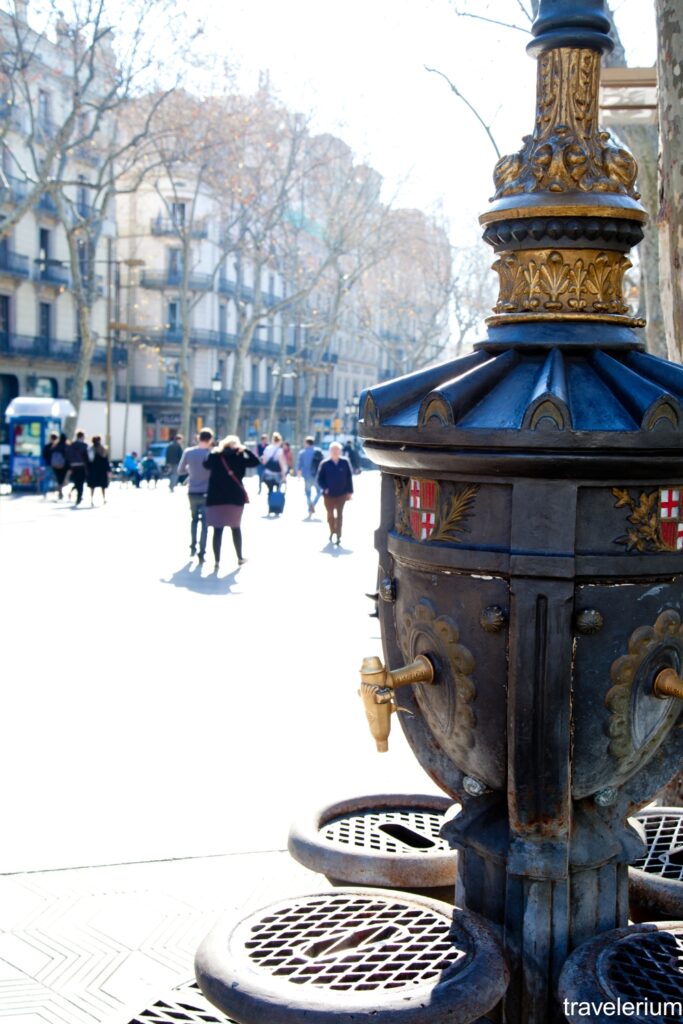
Font de Canaletes – La Rambla
La Rambla Scams: What to Watch Out For
Unfortunately, La Rambla’ popularity makes it a hotspot for pickpockets and scammers. Here are the most common La Rambla scams you should be aware of:
Pickpocketing Techniques
This is by far the most prevalent issue on La Rambla. Pickpockets work in teams and use various distraction techniques:
- The bird poop scam: Someone “accidentally” spills something on you, or you discover bird droppings on your clothes. A helpful stranger offers to clean it off while their accomplice steals your belongings.
- The clipboard scam: People with clipboards claim to be collecting for charity or conducting surveys. While you’re distracted reading or signing, someone else picks your pockets.
- The flower or rosemary scam: Someone forcefully gives you a “free” flower or sprig of rosemary, then demands payment. While you’re dealing with this, your pockets are being picked.
- The helpful stranger: Someone points out that you’ve dropped something or that your shoelace is untied. As you look down, they or an accomplice steal your bags.
- The photo helper: Someone offers to take your photo, then runs off with your phone or camera.
Restaurant and Bar Scams
The establishments directly on Las Ramblas are notoriously overpriced and often serve subpar food. Beyond high prices, watch out for:
- Menu switch: You’re shown a menu with certain prices, but when the bill comes, the prices are different. Always check your bill carefully.
- Hidden charges: Extra charges for service, bread, “table fees,” or other items you didn’t order.
- Drink scams: Extremely inflated prices for drinks, especially at terrace cafes. A simple coffee can cost €5-8, and cocktails can easily exceed €15-20.
Human Statue Photo Scam
While tipping human statues is expected, some become aggressive if they feel the tip isn’t sufficient. The general rule is €1-2 for a photo. Some performers will try to demand €5 or more, especially from tourists who don’t know better.
Fake Petitions
People with official-looking clipboards ask you to sign petitions for worthy causes. After signing, they demand a “minimum donation” or use the distraction to pickpocket you. Legitimate charities don’t operate this way in the street.
Three-Card Monte and Shell Games
These classic street gambling games are designed for you to lose. The operators work in teams, with shills pretending to be lucky winners to draw you in. These games are illegal, and if police approach, everyone scatters—potentially leaving you as the one caught.
Fake Taxis
At both ends of La Rambla, particularly near Plaça de Catalunya, unlicensed “taxis” or drivers may approach offering rides. They lack meters and will charge exorbitant rates. Official Barcelona taxis are black and yellow with working meters.
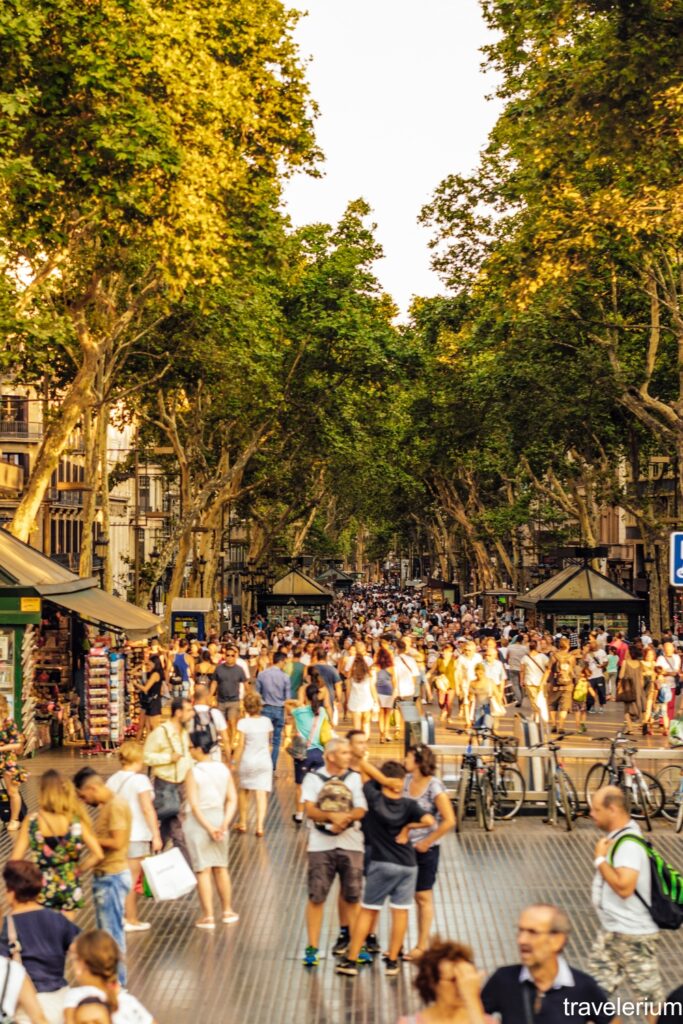
La Rambla Safety: Essential Tips
Despite the scams, millions of people visit La Rambla safely every year. Follow these La Rambla safety guidelines to minimize your risk:
Securing Your Belongings
- Use a money belt or neck pouch under your clothes for passports, credit cards, and large amounts of cash
- Carry bags in front of you, not hanging on your back or side
- Keep your phone in a front pocket or secured bag, not in back pockets
- Use a crossbody bag with zippers, not open totes or easily opened bags
- Don’t keep valuables in outer pockets of backpacks
- Avoid placing purses on the backs of chairs or on the ground at cafes
Staying Aware
- Stay alert and aware of your surroundings. Pickpockets target distracted tourists looking at maps or taking photos
- Be suspicious of anyone getting too close to you, especially in crowds
- Beware of distractions. If something unusual happens around you, immediately secure your belongings
- Walk with purpose, even if you’re lost
- Travel in groups when possible, especially at night
General Precautions
- Only carry what you need. Leave extra credit cards, your passport (unless legally required), and valuable jewelry in your hotel safe
- Make copies of important documents and store them separately from the originals
- Don’t flash expensive items like jewelry, cameras, or large amounts of cash
- Be cautious at ATMs. Use machines inside banks when possible, and shield the keypad when entering your PIN
What to Do If You’re Pickpocketed
Despite precautions, theft can still happen. If it does:
- Report it to police immediately at the nearest Mossos d’Esquadra station (Catalan police). There’s a station at Carrer Nou de la Rambla, 76-80
- Cancel your credit and debit cards immediately
- Contact your embassy if your passport was stolen
- File a report for insurance purposes
Beyond the Boulevard: Nearby Attractions Worth Exploring
While La Rambla itself is worth seeing, the real treasures of Barcelona lie in the neighborhoods surrounding it:
The Gothic Quarter (Barri Gòtic)
To the east of La Rambla, the Gothic Quarter is a maze of medieval streets, Roman ruins, and beautiful architecture. Highlights include the Barcelona Cathedral, Plaça del Rei, and the remnants of the ancient Roman city walls. This area has better restaurants, authentic bars, and a more genuine Barcelona atmosphere than La Rambla itself.
El Raval
On the western side of La Rambla, El Raval has transformed from a rough neighborhood to a multicultural, artistic area. Visit the MACBA (contemporary art museum) and the impressive Sant Pau del Camp monastery. The neighborhood has a grittier, more authentic feel and excellent international restaurants.
The Waterfront (Port Vell)
At the southern end of La Rambla, the Port Vell area offers a refreshing change from the crowded boulevard. The Maremagnum shopping center sits on a wooden walkway extending into the harbor, and the area features an aquarium and numerous waterfront restaurants.
When to Visit La Rambla
Timing your visit can significantly impact your experience:
Best Times of Day
- Early morning (before 10 AM): La Rambla is at its most peaceful. You’ll see locals walking their dogs, shop owners setting up, and the street cleaners washing down the pavement. It’s the best time for photos without crowds and to visit La Boqueria market when vendors are at their freshest.
- Evening (after 8 PM): The boulevard takes on a different character as locals emerge and street performers light up their acts. It’s busier but has good energy. However, be extra vigilant with your belongings.
Avoid: Midday (11 AM-2 PM) and early evening (6-8 PM) when cruise ship groups and tour buses converge on the area.
Best Seasons
- Spring (April-June) and Fall (September-October): Pleasant weather, fewer crowds than summer, and reasonable hotel prices make these ideal times to visit.
- Summer (July-August): Peak tourist season means maximum crowds and heat. La Rambla can feel overwhelmingly packed.
- Winter (November-March): Fewer tourists and mild weather make winter visits pleasant. Some street performers may be absent, but the trade-off is more space to breathe.
Eating and Drinking: Where to Go Instead
One of the biggest mistakes tourists make is dining on La Rambla itself. Here’s where to go instead:
Near La Boqueria Market
- Bar Pinotxo: Inside La Boqueria, this tiny counter-service bar is beloved by locals. Arrive early for the chickpeas with blood sausage and pine nuts, one of the most famous dishes in Barcelona’s market scene.
- El Quim de la Boqueria: Another market stall counter serving exceptional eggs with baby squid, fried artichokes, and other seasonal dishes.
Just Off Las Ramblas
- Cervecería Catalana (Passeig de Gràcia area): About a 15-minute walk from La Rambla, this place serves some of the best tapas in Barcelona. Expect queues, but they move quickly.
- Can Culleretes: Founded in 1786, this is Barcelona’s oldest restaurant. Located just off La Rambla in the Gothic Quarter, it serves traditional Catalan cuisine in a historic setting.
In El Raval
- Bar Cañete: A locals’ favorite for tapas and seafood, located on the El Raval side of La Rambla. Expect to wait for a table, but it’s worth it.
- Granja M. Viader: A historic dairy bar serving traditional Catalan snacks like mel i mató (honey and fresh cheese) and thick hot chocolate.
Getting to and Around Las Ramblas
Public Transportation
- Metro: The most convenient metro stops are:
- Catalunya (L1 – Red, L3 – Green): Northern end of La Rambla
- Liceu (L3 – Green): Middle section
- Drassanes (L3 – Green): Southern end near the Columbus Monument
- Aerobus: From the airport, the Aerobus stops at Plaça de Catalunya, making it convenient for those with luggage heading to nearby hotels.
Walking La Rambla
The entire boulevard is pedestrianized down the center, with vehicle traffic on either side. Walking from Plaça de Catalunya to the Columbus Monument takes about 15-20 minutes at a leisurely pace, though you’ll likely spend much longer exploring.
Accessibility: La Rambla is flat and wheelchair accessible, though it can be crowded. Side streets in the Gothic Quarter and Raval are often narrow and may have steps.
La Rambla Etiquette and Cultural Tips
Understanding local customs enhances your visit and shows respect:
Tipping and Dining Culture
Spain isn’t a heavy tipping culture. At restaurants, leaving 5-10% for good service is appreciated but not obligatory. For street performers, €1-2 for photos is standard.
Lunch is typically 2-4 PM, and dinner rarely starts before 9 PM. If you eat earlier, you’ll be dining with other tourists, not locals.
Language
While many people speak English, learning basic Spanish or Catalan phrases shows respect. “Bon dia” (good morning in Catalan), “gràcies” (thank you), and “perdoni” (excuse me) go a long way.
Photography
Always ask permission before photographing people, including street performers up close. Be respectful in sacred spaces like churches.
History of La Rambla: Understanding the Boulevard’s Past
The name “Rambla” comes from the Arabic “ramla,” meaning “sandy riverbed.” Indeed, La Rambla follows the path of an old seasonal stream that ran along Barcelona’s medieval walls.
In medieval times, this was the city’s boundary. The 18th century saw major transformations as walls came down and the stream was paved over. Trees were planted, creating a shaded promenade. By the 19th century, La Rambla had become the fashionable place for Barcelona’s bourgeoisie to stroll.
The street has witnessed pivotal moments in Barcelona’s history, from celebrations of FC Barcelona victories to political demonstrations. On August 17, 2017, a terrorist attack on La Rambla killed 14 people and injured over 100. This tragic event led to increased security measures, including bollards to prevent vehicle access. Despite this dark chapter, La Rambla remains a symbol of Barcelona’s resilient spirit.
Where to Stay Near La Rambla
While staying directly on La Rambla isn’t recommended due to noise and tourist saturation, several nearby neighborhoods offer convenient access:
Gothic Quarter
Staying in the Gothic Quarter puts you steps from La Rambla while offering a more authentic experience. You’ll be surrounded by history, great tapas bars, and charming squares.
El Born/La Ribera
Slightly further from La Rambla but easily walkable, this trendy neighborhood offers excellent restaurants, boutiques, and nightlife. It’s where younger locals hang out.
Eixample
If you prefer modern Barcelona with wider streets, Eixample (particularly near Passeig de Gràcia) offers excellent hotels and easy metro access to La Rambla. You’ll be near Gaudí’s Casa Batlló and Casa Mila (La Pedrera).
What to Avoid
Hotels directly on La Rambla: Noise continues well past midnight, rooms are often overpriced, and you’re in the heart of tourist-trap territory.
Is La Rambla Worth Visiting?
This is the question many travelers ask after reading about the scams and crowds. The answer is nuanced: La Rambla is absolutely worth visiting as part of your Barcelona experience, but it shouldn’t be your entire focus.
Visit La Rambla for:
- The people-watching and vibrant street life
- La Boqueria market (an absolute must)
- The historic Liceu opera house
- Easy access to the Gothic Quarter and Raval
- The sheer experience of walking Barcelona’s most famous street
Don’t expect:
- Authentic local culture (it’s heavily touristed)
- Good value restaurants on the boulevard itself
- A peaceful, relaxing experience
- Safety to let your guard down
Think of La Rambla as Barcelona’s stage—it’s theatrical, exciting, and full of energy, but it’s not where real life happens. The real Barcelona exists in the neighborhoods just steps away from this famous boulevard.

Final Tips for Your La Rambla Visit
- Duration: Budget 2-3 hours for a thorough walk including market visits and stops, or just 30 minutes if you’re simply experiencing the boulevard.
- Combine with: The Gothic Quarter, El Raval, the waterfront, and the Palace of Catalan Music for a full day of sightseeing.
- Photography: Early morning offers the best light and fewest crowds for photos. The section near La Boqueria with flower stalls is particularly photogenic.
- Stay alert but enjoy: Yes, pickpocketing is common, but don’t let paranoia ruin your visit. Take sensible precautions, then relax and enjoy the experience.
- Support legitimate businesses: Buy flowers from the market stalls, tip street performers fairly, and patronize the historic establishments rather than tourist traps.
Conclusion: Making the Most of La Rambla
La Rambla remains an essential part of the Barcelona experience despite its challenges. This La Rambla Barcelona guide has armed you with the knowledge to avoid common scams, stay safe, and find the genuine highlights among the tourist traps.
Remember that the best things to do at La Rambla often involve simply observing—watching the human statues transform, seeing locals buy flowers at the market stalls, and feeling the energy of one of Europe’s most famous streets. The key is balancing the famous boulevard with the authentic neighborhoods surrounding it.
Use La Rambla as your introduction to Barcelona, your orientation point, and your pathway to better discoveries. Visit La Boqueria in the morning, walk the full length once to check it off your list, then spend your remaining time exploring the medieval alleys of the Gothic Quarter, the modernist masterpieces of Eixample, and the beachfront neighborhoods where locals actually live.
La Rambla safety concerns shouldn’t prevent your visit—millions of people walk this boulevard every year without incident. Stay aware, secure your belongings, ignore aggressive vendors and panhandlers, and don’t let paranoia ruin the experience. With this La Rambla guide in hand, you’re prepared to enjoy Barcelona’s most famous street while avoiding its most common pitfalls.
Most importantly, remember that La Rambla is just the beginning of what Barcelona has to offer. Let it be your starting point, not your destination, and you’ll discover why this city captures hearts far beyond its famous boulevard. Whether you visit for the historic markets, the stunning architecture just off the main drag, or simply to say you’ve walked one of Europe’s most iconic streets, La Rambla delivers an unforgettable Barcelona experience when approached with the right knowledge and expectations.