
You can explore a compact slice of Barcelona’s Olympic legacy without wasting time. The Olympic Ring in Montjuïc brings together the Lluís Companys Olympic Stadium, Palau Sant Jordi, the Bernat Picornell pools, and Calatrava’s communications tower, so you can see sport history, striking architecture, and public spaces in one visit. If you want a clear, walkable route through the sites and practical tips for getting there, this article shows what to see and how to plan your visit.
Walk the plazas and paths to feel how the 1992 Olympic Games reshaped the hill, then pause at design highlights and active community spaces that still serve Barcelona today. Expect maps, transport tips, and short descriptions of the main landmarks so you can build a visit that fits your time and interests.
What Is the Olympic Ring in Montjuïc?
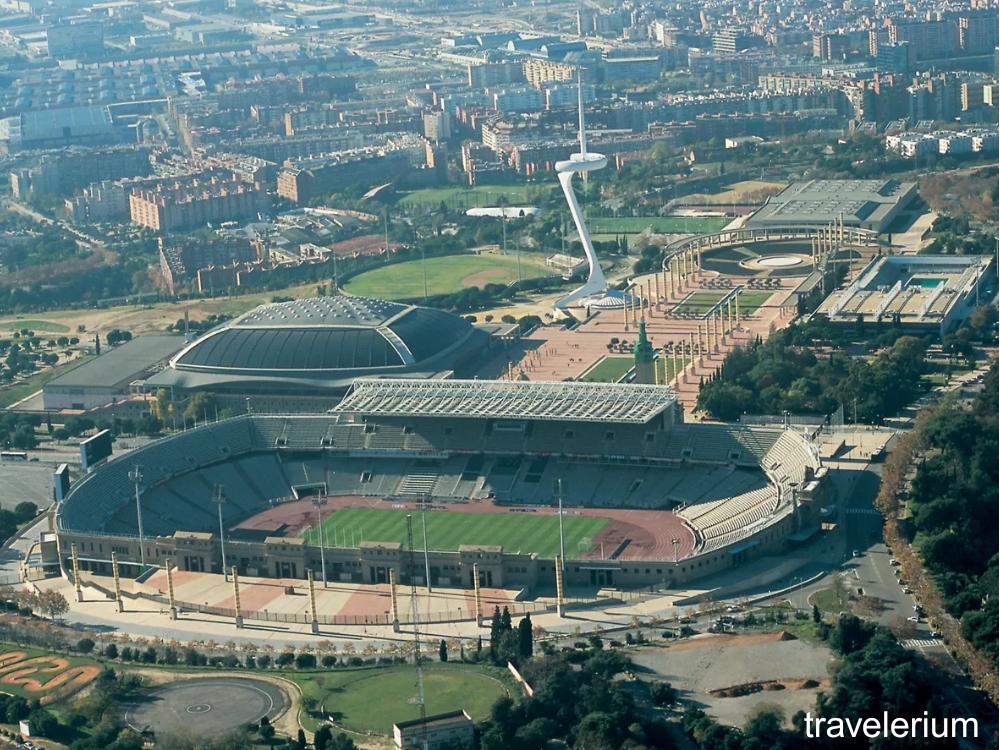
The Olympic Ring sits on Montjuïc hill and groups several major sports buildings from the 1992 Summer Olympics. You will find the Estadi Olímpic Lluís Companys, Palau Sant Jordi, the telecommunications tower, and outdoor pools grouped around wide plazas and gardens.
History and Purpose
The site traces its modern role to Barcelona’s bid and preparation for the 1992 Summer Olympics. Planners rebuilt and expanded older facilities on Montjuïc to host ceremonies and competitions. The Estadi Olímpic Lluís Companys — originally opened earlier in the 20th century — received a major renovation to serve as the main stadium for opening and closing ceremonies and athletics events.
You will see that the purpose went beyond sport. Organizers aimed to reconnect the city with Montjuïc, improve transport links, and create public spaces. After the Games, many venues became community and event sites rather than purely elite sports arenas.
Main Features of the Olympic Ring
The Olympic Ring (Anella Olímpica) groups key landmarks in a compact layout. Major components include:
- Estadi Olímpic Lluís Companys — main stadium for ceremonies and athletics.
- Palau Sant Jordi — indoor arena for sports and concerts.
- Torre Telefónica (Calatrava tower) — a 136-meter communication tower and visual landmark.
- Bernat Picornell pools and INEFC — public swimming facilities and sports education center.
Paths and plazas connect these sites through gardens on Montjuïc. The alignment of stadium, tower, and Palau creates a striking visual axis you can easily walk in one visit. Many venues now host concerts, sports events, and public activities, and most offer visitor services like cafés and free Wi‑Fi.
Legacy of the 1992 Summer Olympics
You benefit from lasting infrastructure and open spaces created for the 1992 Games. The Olympic Ring helped modernize transport to Montjuïc, including funicular and improved road access, making the hill easier to visit today. The Games also spurred urban renewal across Barcelona, with Montjuïc becoming a cultural and recreational hub.
Facilities keep active roles: the stadium hosts sporting events and public gatherings, Palau Sant Jordi stages concerts, and pools serve local swimmers. The site remains a clear, visible reminder of Barcelona’s Olympic moment and a practical set of venues you can visit for sport, culture, or leisure.
Key Landmarks and Venues to Visit
This area mixes large sports venues, striking architecture, and active public facilities. You can see the main stadium, a modern indoor arena, a sports museum, and public swimming pools—all within a short walk.
Lluís Companys Olympic Stadium
You enter the Estadi Olímpic Lluís Companys at a site rebuilt for the 1992 Games. The stadium hosted the opening and closing ceremonies and the athletics events.
Note the long limestone façade and the wide steps that lead up from Avinguda de l’Estadi. Those features make the arrival feel ceremonial.
If you want a photo with the city behind you, walk to the upper tiers for clear views across Barcelona and the harbour. The field still holds concerts and football matches, so check the schedule before your visit. Guided tours explain its role in 1992 and show the athletes’ areas, press rooms, and the track.
Palau Sant Jordi
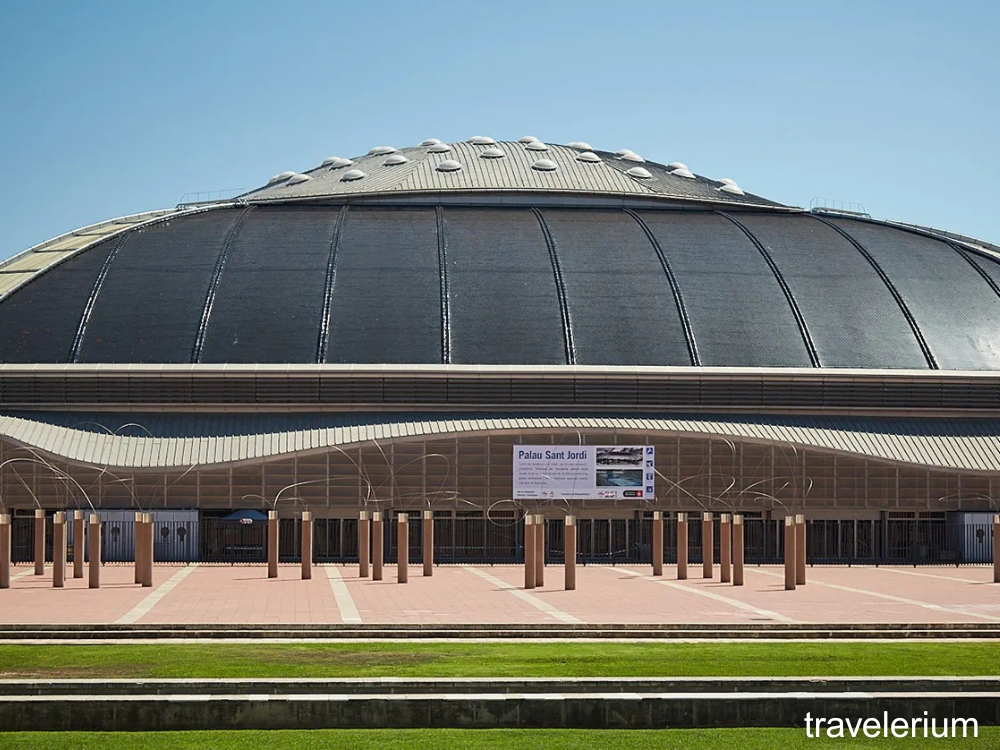
Palau Sant Jordi sits below the stadium and was designed by Arata Isozaki for the 1992 Games. It functions as a covered arena for sports, concerts, and large events.
You can spot its curved roof and the concrete bowl from many points on Montjuïc.
Inside, look for flexible seating that adapts from intimate shows to big international fixtures. If you plan to see a concert, arrive early to use the nearby public transit and avoid queues. The venue also hosts sports tournaments and trade shows, so its calendar changes often.
Olympic and Sports Museum
The Olympic and Sports Museum documents Barcelona’s Olympic legacy and broader sports history. Exhibits cover the 1992 Games, athlete stories, trophies, and interactive displays about training and fair play. You can browse multimedia exhibits that explain how venues were built and reused after the Games.
The museum sits near the stadium complex and often runs temporary exhibits on local clubs and Paralympic sport. Look for timelines, original memorabilia, and hands-on displays that let you test reaction time or learn about sports science. Check opening hours; ticketing is separate from stadium or arena events.
Picornell Swimming Pools
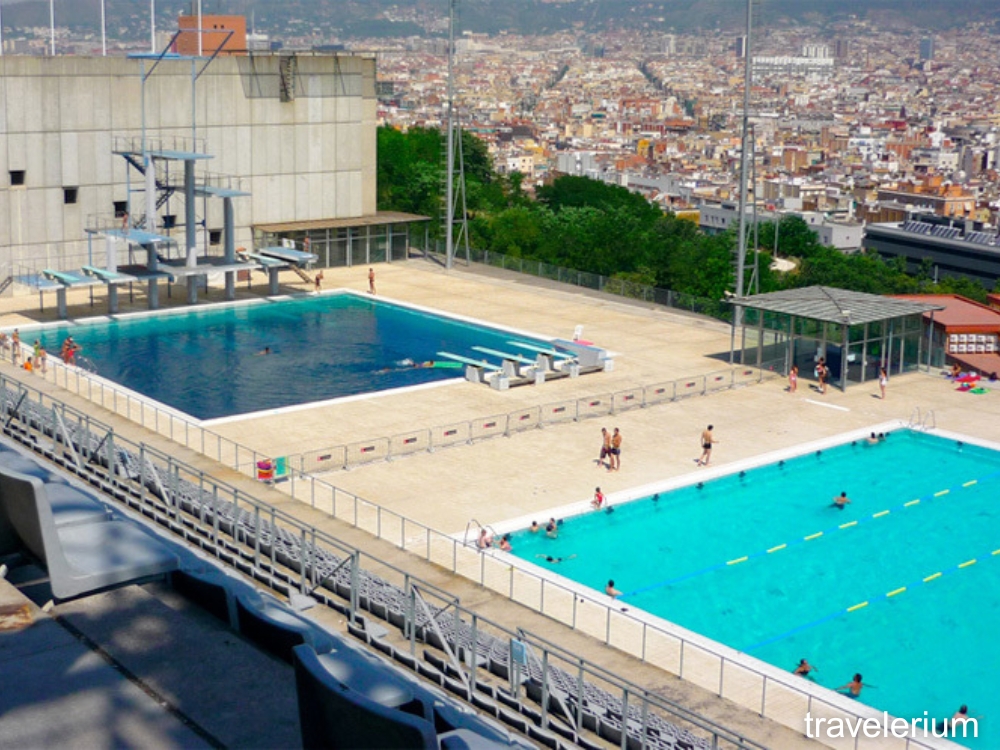
The Bernat Picornell swimming pools lie a short walk from the stadium and remain active as public and competitive pools. They were used for aquatic events during the Olympics and still host national meets. The complex includes an outdoor 50m pool with spectator stands and an adjoining warm-up pool.
If you want to swim, bring a swimsuit and check lane availability; the pools serve both clubs and casual swimmers. The terraces behind the pools give a good vantage point for views of Montjuïc and the city. The pools combine historic Olympic function with daily community use.
Modern Icons and Architectural Highlights
This area mixes bold modern forms, structural drama, and local craft. You will find a signature tower by Santiago Calatrava, a national sports institute with clear functional design, and finishes that tie the complex to Barcelona’s materials and style.
Telecommunications Tower by Santiago Calatrava
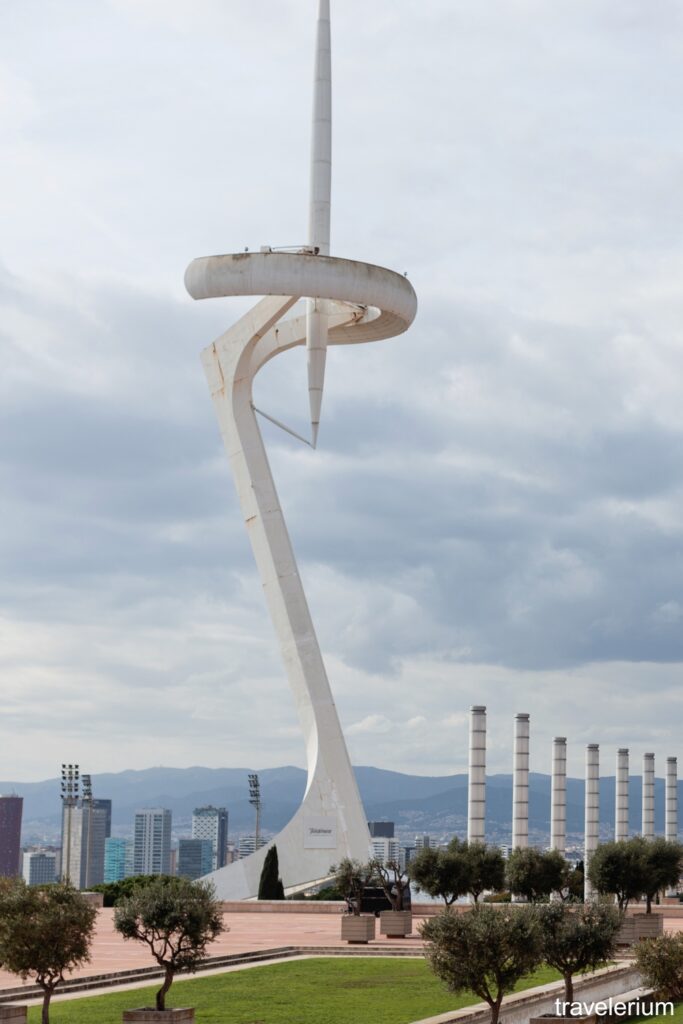
You’ll see a tall, white telecommunications tower that points skyward near the main promenade. Calatrava designed the tower for visibility and function; it housed broadcast equipment and served as a sculptural focal point for the Olympic Ring.
The tower’s slim, curved mast and cantilevered elements make it readable from many angles across Montjuïc. Calatrava used smooth white surfaces and a skeletal structure to create a sense of motion, echoing athletic dynamism.
Look for details where structure becomes ornament. The tower’s open sections and repeating ribs cast shifting shadows, giving it a changing appearance through the day. Photographers favor it for clean lines against the skyline.
INEFC and the National Physical Education Institute
You’ll visit the INEFC building as the hub for sports education and research in Spain. Its design emphasizes clear circulation, large indoor training spaces, and classrooms that open onto the park.
The institute’s massing balances solidity with light. Long façades and glazed sections bring daylight into training halls. You will notice practical materials chosen for durability and easy maintenance after heavy use.
Inside, wide corridors and multipurpose halls let you move quickly between labs, gyms, and lecture rooms. The layout supports hands-on teaching and elite athlete preparation, making the building both a school and a working sports facility.
Innovative Design Elements in the Olympic Ring
You’ll find a mix of architectural ideas that tie the Olympic Ring together: promenades, water features, and local craftwork like trencadís. These elements create visual links between the stadium, Palau Sant Jordi, and the surrounding park.
Trencadís tile work appears on steps and benches, using broken ceramic pieces to add color and texture. The main promenade aligns sightlines from the stadium toward Montjuïc Castle, reinforced by pools and canals that reflect buildings and sky.
Materials and form serve clear purposes: concrete for structure, glass for light, and tiled surfaces for public touch points. This pragmatic approach gives you durable public spaces that also carry a distinct Barcelona character.
Visitor Experience: How to Get There and Tips
Expect a mix of public transport and short walks. You can reach the Olympic Ring by metro, funicular, cable car, bus, or tourist bus. Plan for uphill paths and check ticket rules for each link.
Getting to the Olympic Ring
Take Metro L1 (red) or L3 (green) to España station for the most direct access. From España, follow signs toward the Montjuïc funicular or catch a local bus that stops near Avinguda de l’Estadi. If you use the Hop On Hop Off tourist bus, get off at the “Anella Olímpica” stop to be closest.
If you arrive by metro at Paral·lel, transfer to the Montjuïc funicular at the station base. Walking from the lower funicular station to the venues takes about 10–20 minutes uphill. Wear comfortable shoes and allow extra time for crowds during events.
Useful quick facts:
- Nearest metro: España (L1, L3) and Paral·lel (transfer to funicular).
- Bus lines: 13, 55, 125, 150 (check local timetables).
- Hop On Hop Off: “Anella Olímpica” stop.
Using the Montjuïc Funicular and Cable Car
The Montjuïc funicular links Paral·lel metro with the Montjuïc hillside. It runs on the metro ticket system, so a valid T-10, T-Casual, HolaBCN, or Barcelona Card often covers it. The funicular saves a steep climb and lands you near the funicular upper station, a short walk from the Olympic Ring.
From the funicular upper station you can walk or take the Montjuïc cable car for views. The cable car departs close to the funicular’s top; buy a separate cable car ticket unless your pass includes it. The cable car takes you higher toward Montjuïc Castle and gives panoramic city views, but it adds cost and queues can form on sunny days.
Tips:
- Use HolaBCN or Barcelona Card for combined public transport value.
- Expect stairs between some stations; plan for limited elevator access.
- Peak times: mornings and late afternoons on event days.
Entry Information and Accessibility
Most outdoor areas of the Olympic Ring are open to the public with no entry fee. Specific venues like the Lluís Companys Stadium or Palau Sant Jordi may charge admission for events, guided tours, or exhibitions. Check each venue’s official site for hours and ticket prices before you go.
Accessibility: paths around the Ring are paved but include ramps and long slopes. The funicular offers step-free access between Paral·lel and the hill top. The cable car and some venue entrances have lifts, but availability can vary. If you need mobility assistance, contact venue customer service in advance and arrive early to use accessible entrances.
Practical items to bring:
- Valid transport pass or single tickets.
- Water and sun protection for uphill walks.
- Copies of event tickets if visiting Palau Sant Jordi or the stadium.