
Barcelona’s Gothic Quarter (Barri Gòtic in Catalan) stands as one of Europe’s most enchanting medieval neighborhoods—a labyrinthine district where narrow cobblestone streets wind between towering stone buildings, where Roman ruins hide beneath Gothic palaces, and where centuries of history remain palpably alive in daily rhythms. This atmospheric heart of Barcelona’s old city offers visitors an intoxicating journey through two millennia of Catalan culture, architecture, and urban life.
Walking these shadowy lanes feels like stepping into another era. The neighborhood’s medieval street plan remains remarkably intact, creating an intimate urbanscape where discovering hidden plazas, stumbling upon ancient courtyards, and losing yourself in atmospheric alleyways becomes part of the essential experience. Yet the Gothic Quarter functions not as a museum but as a living neighborhood where residents shop at traditional markets, elderly locals chat on plaza benches, and centuries-old buildings house contemporary businesses.
The things to do in Gothic Quarter Barcelona extend far beyond landmark tourism. While the magnificent cathedral, royal palaces, and historic squares demand attention, equally rewarding are unplanned discoveries—a Roman column emerging from a medieval wall, traditional craftspeople maintaining centuries-old trades, or neighborhood bars serving the same families for generations.
This guide explores the Gothic Quarter’s essential experiences, historical layers, hidden corners, and practical considerations. It functions as a deep dive into the city’s historic core, complementing an Ultimate Guide to Barcelona by helping visitors navigate this complex neighborhood while understanding the remarkable story written in its ancient stones.
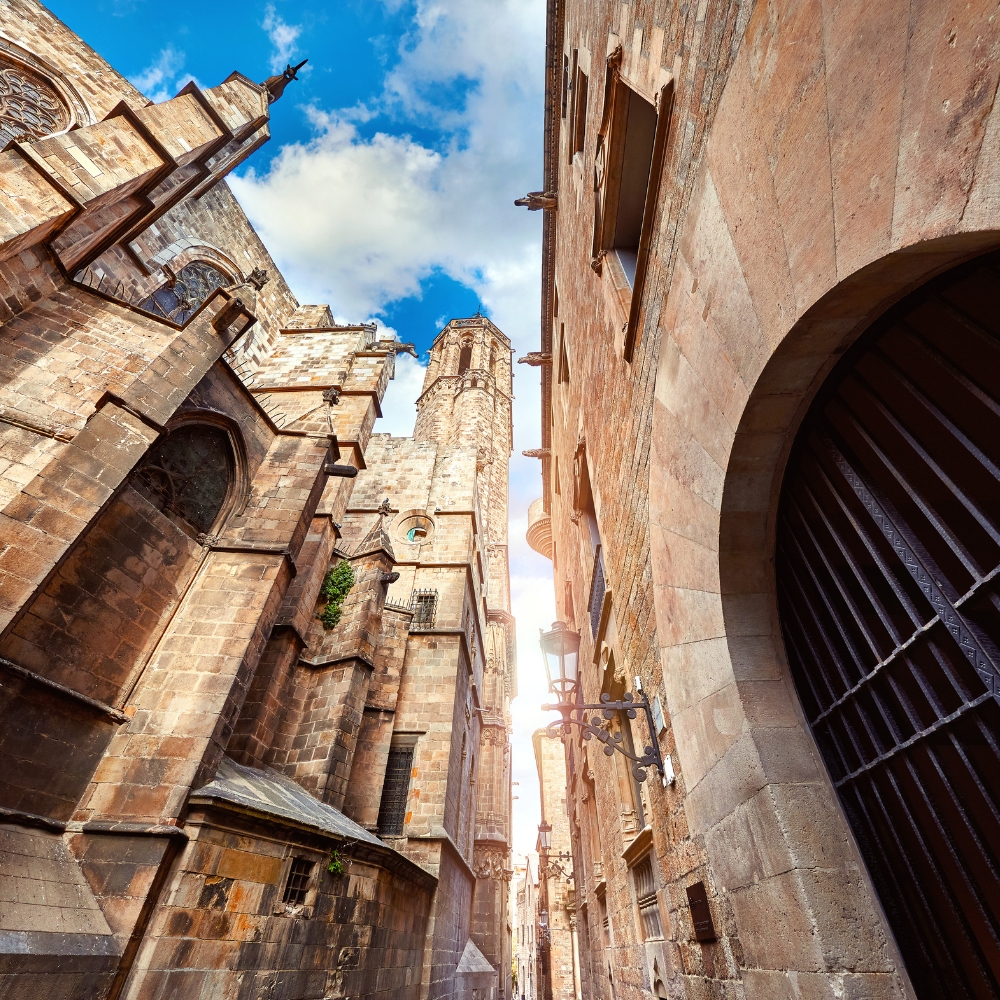
Historical Background: From Roman Barcino to Medieval Marvel
Understanding the Gothic Quarter requires appreciating its extraordinary historical depth. The neighborhood occupies the site of Barcino, the Roman colony founded around 15 BCE during Emperor Augustus’s reign. The original Roman settlement covered a modest 12 hectares, surrounded by defensive walls that still partially survive, forming what remains Barcelona’s oldest visible architectural heritage.
Walking the Gothic Quarter today, you’re literally treading atop Roman foundations. Beneath medieval buildings lie remarkably preserved Roman streets, houses, workshops, and public buildings. The Barcelona History Museum (MUHBA) offers extraordinary underground access to these excavated remains, where visitors walk through actual Roman streets and see mosaic floors, drainage systems, and everyday artifacts revealing how Barcino’s inhabitants lived.
Four massive Roman columns survive on Carrer Paradís, marking the site of the ancient Temple of Augustus. These towering Corinthian columns, standing over 9 meters tall, create a startling juxtaposition—ancient Imperial grandeur hidden within a medieval building. The columns remind visitors that the Gothic Quarter’s story begins not in the Middle Ages but centuries earlier.
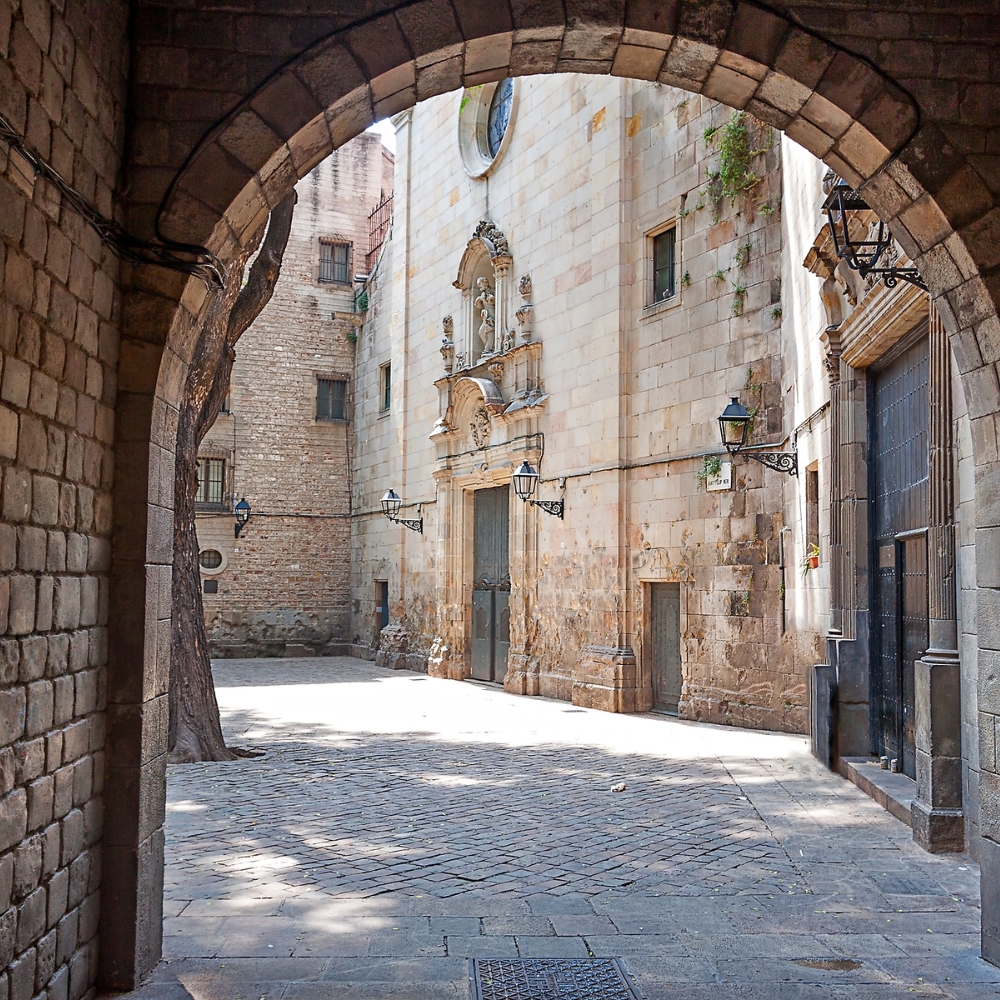
The medieval transformation that gave the neighborhood its name occurred primarily between the 13th and 15th centuries, Barcelona’s golden age. As capital of the Crown of Aragon—a Mediterranean empire controlling territories from Catalunya to Sicily—Barcelona flourished economically and culturally. Wealthy merchants built palatial residences, the monarchy constructed impressive governmental buildings, and the Catholic Church erected the magnificent cathedral that still dominates the skyline.
The architectural style that emerged—Catalan Gothic—differs from Northern European Gothic. Rather than soaring vertical emphasis, Catalan Gothic prioritizes horizontal spaciousness, achieves wide naves through innovative engineering, and creates austere exteriors that contrast with elaborate interiors. This distinctive style defines the Gothic Quarter’s character.
By the 19th century, the Gothic Quarter had fallen into disrepair and neglect. Industrialization drew resources to newer districts, and serious discussions proposed wholesale demolition. Fortunately, the Catalan cultural renaissance (Renaixença) sparked renewed appreciation for medieval heritage. Extensive restoration followed, though controversially including “neo-Gothic” additions that enhanced romantic medieval character over strict historical accuracy.
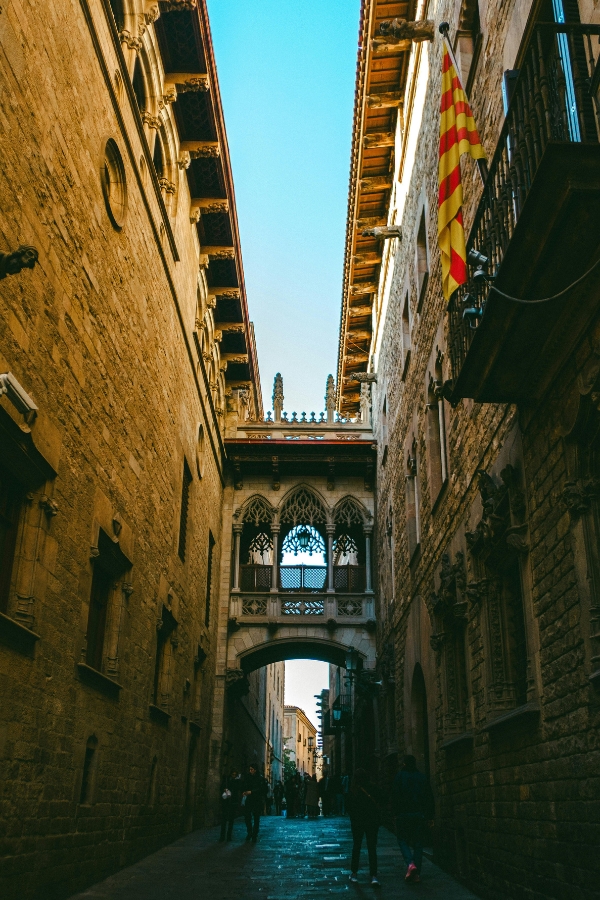
The iconic Pont del Bisbe (Bishop’s Bridge) illustrates this phenomenon. Though appearing thoroughly medieval and among the most photographed Gothic Quarter features, it was actually constructed in 1928 as part of neo-Gothic renovations. The “authentic” Gothic Quarter thus represents multiple historical layers, including 20th-century interpretations of medieval aesthetics.
Essential Landmarks and Iconic Sites
Barcelona Cathedral
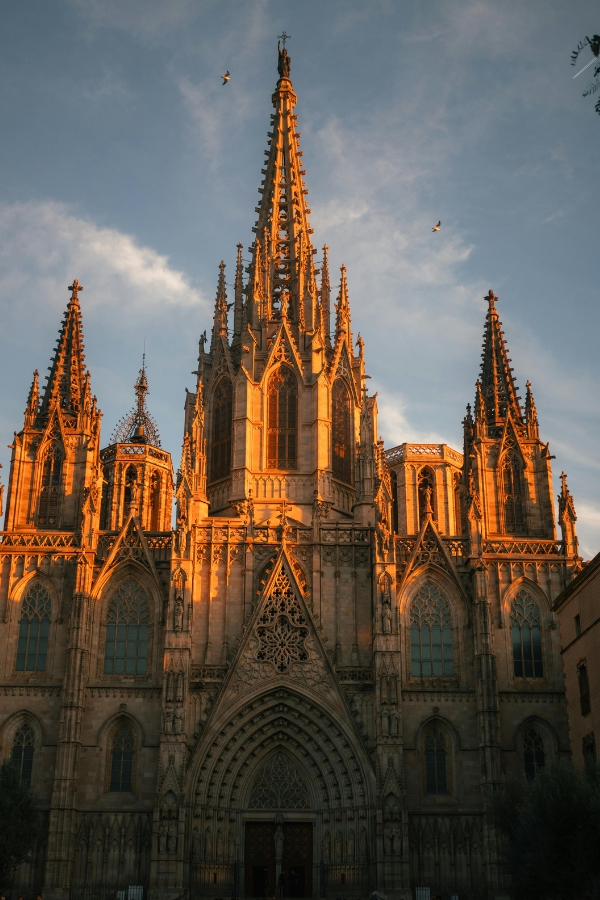
The Cathedral of the Holy Cross and Saint Eulalia dominates the Gothic Quarter both physically and spiritually. This magnificent Catalan Gothic structure towers over the surrounding neighborhood, though its elaborate facade represents neo-Gothic work completed in 1913 rather than medieval original.
The cathedral’s interior showcases Catalan Gothic characteristics—impressive horizontal spaciousness achieved through side chapels positioned between interior buttresses rather than extreme vertical reach. The nave extends 79 meters in length and reaches 26 meters in height, creating soaring spaces that inspire awe.
The crypt houses the alabaster sarcophagus of Saint Eulalia, Barcelona’s co-patron saint who suffered martyrdom during Roman persecutions. The cloister offers the cathedral’s most charming feature—a peaceful Gothic courtyard where thirteen white geese (representing Eulalia’s age at martyrdom) waddle freely, delighting visitors with this quirky tradition.
Cathedral rooftop access provides spectacular 360-degree views over the Gothic Quarter’s terracotta rooftops and beyond to the Mediterranean. Walking among Gothic spires and gargoyles while overlooking medieval streets creates unforgettable perspectives on Barcelona’s layered history.
Plaça del Rei and the Royal Palace
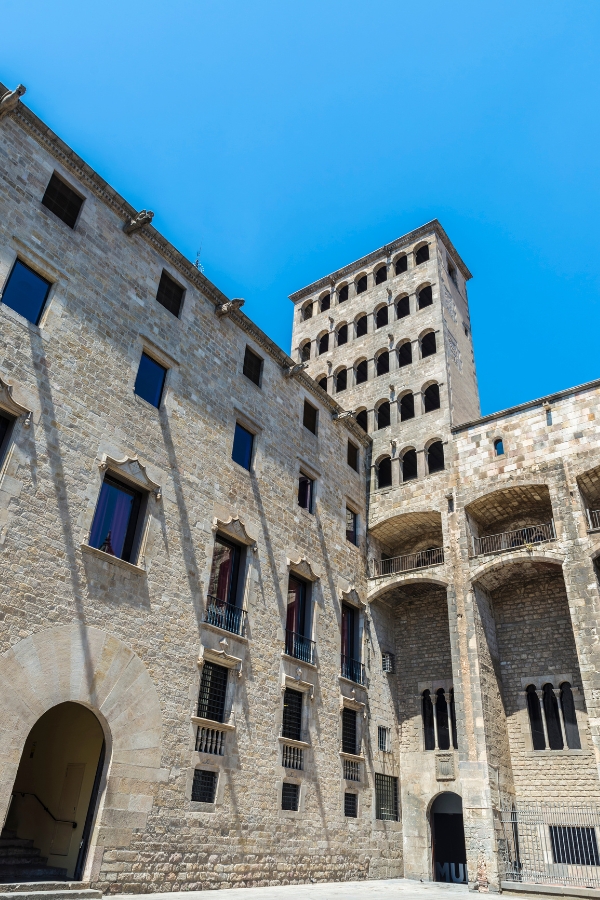
Plaça del Rei (King’s Square) constitutes one of the Gothic Quarter’s most historically significant spaces. This intimate plaza, enclosed by Gothic palaces and watched over by a five-story medieval tower, served as the ceremonial heart of the Crown of Aragon’s presence in Barcelona.
The Saló del Tinell, a magnificent 14th-century Gothic hall, features one of the period’s most impressive stone-arched ceilings. This vast, column-free space—17 meters wide and 33 meters long—served as the throne room where, according to tradition, Ferdinand and Isabella received Christopher Columbus in 1493 upon his return from the Americas.
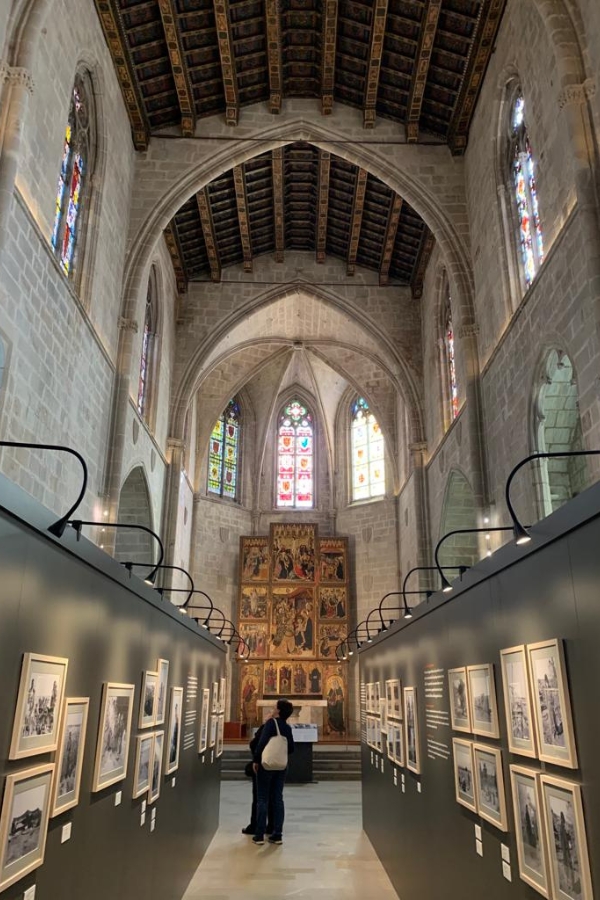
Adjacent Capella de Santa Àgata served as the royal chapel, exemplifying Catalan Gothic religious architecture with its single nave and elaborate altarpiece. The plaza’s enclosed nature and architectural unity create an almost stage-set quality, particularly in evening hours when lighting emphasizes the medieval character.
Today these royal buildings form part of the Barcelona History Museum, with underground archaeological excavations beginning beneath Plaça del Rei, revealing extensive Roman remains beneath the medieval palace complex.
Plaça Sant Jaume
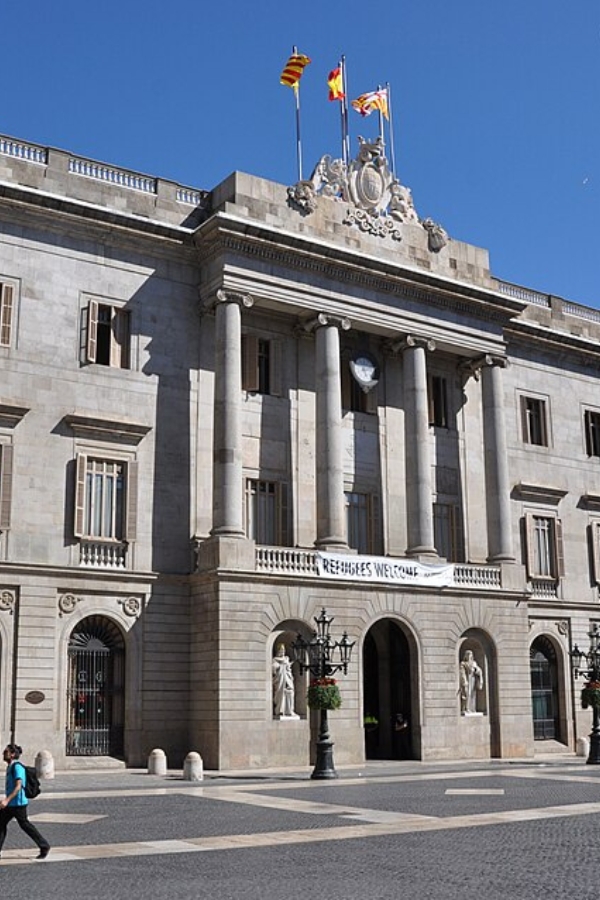
Plaça Sant Jaume represents the political heart of both the Gothic Quarter and Catalunya itself. This square, occupying the site of the Roman forum, has served as the center of political power for two millennia.
The Palau de la Generalitat (seat of the Catalan government) occupies the northern side, featuring a Renaissance facade concealing Gothic interiors including the chapel of Saint George and a beautiful courtyard with external Gothic staircase. Opposite stands the Casa de la Ciutat (Barcelona’s city hall), whose neoclassical facade hides Gothic interiors including the spectacular Saló de Cent where Barcelona’s medieval city council met.
Both buildings offer free public access on Sundays, providing rare opportunities to explore their historic interiors. The plaza functions as Barcelona’s primary venue for public celebrations, protests, and demonstrations, serving not merely as historic site but as living political space where contemporary Catalan identity finds expression.
Hidden Treasures and Atmospheric Streets
The Jewish Quarter (El Call)
Hidden within the Gothic Quarter lies El Call, Barcelona’s medieval Jewish quarter and one of the neighborhood’s most historically significant yet frequently overlooked areas. This tiny district housed Barcelona’s Jewish population from at least the 11th century until the tragic pogrom of 1391 and subsequent expulsion orders ended Jewish life in Barcelona.
The Sinagoga Major on Carrer Marlet, rediscovered in the 1990s, now operates as a small museum. Dating to at least the 13th century, it ranks among Europe’s oldest surviving synagogues. Its modest size and nondescript exterior reflect both medieval constraints on Jewish religious buildings and centuries of obscurity when the structure served various secular purposes.
Interpretive markers throughout El Call identify significant locations, while the narrow streets retain medieval character. The Call represents one of the Gothic Quarter’s most poignant historical layers—a reminder that the neighborhood’s story includes tragedy alongside architectural beauty.
Charming Streets and Courtyards
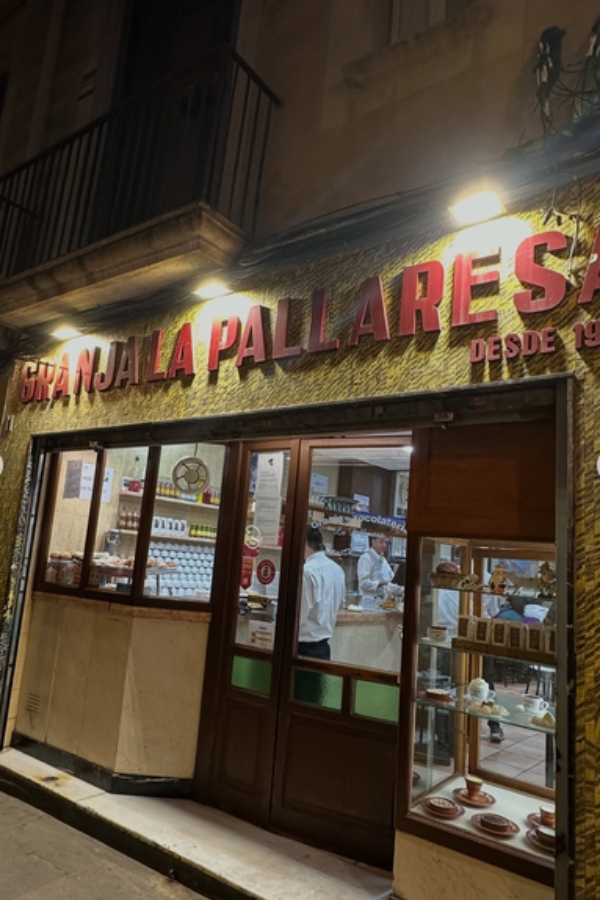
Beyond major landmarks, the Gothic Quarter’s greatest treasures often hide in plain sight. Carrer Petritxol maintains its medieval width while housing historic chocolate shops including Granja La Pallaresa, where thick Spanish hot chocolate served with churros continues generations-old traditions.
Carrer del Bisbe connects Plaça Sant Jaume with the cathedral area, creating quintessential Gothic Quarter atmosphere. Walking beneath the Pont del Bisbe and along this narrow medieval street offers atmospheric beauty requiring nothing more than slow appreciation.
Countless hidden courtyards punctuate the urban fabric. The Casa de l’Ardiaca (Archdeacon’s House) features a beautiful courtyard with Roman wall sections, while glimpses through doorways throughout the neighborhood reveal private courtyards inaccessible except during rare open-door events.
The medieval streets surrounding Santa Maria del Pi church create particularly atmospheric mazes. The area around Plaça Sant Felip Neri, with its baroque church and tragic bullet-scarred walls from Civil War bombing, offers quiet, contemplative space away from main tourist flows.
Museums and Cultural Experiences
Barcelona History Museum (MUHBA)
The Barcelona History Museum offers the single most comprehensive way to understand the Gothic Quarter’s multilayered history. Located at Plaça del Rei, the museum features one of Europe’s most impressive underground archaeological exhibitions.
After entering the medieval Padellàs House, visitors descend via elevator deep beneath Plaça del Rei to walk through excavated sections of Roman Barcino. These remarkably preserved remains include residential houses with mosaic floors, shops, wine-making facilities, public baths, and ancient streets with drainage systems intact.
The scale and preservation quality astonishes first-time visitors. You’re walking through actual ancient streets and buildings, seeing the foundations upon which medieval and modern Barcelona developed. The subterranean route eventually leads upward into the Saló del Tinell and Capella de Santa Àgata, connecting Roman foundations directly to medieval royal spaces.
This physical journey through architectural layers brilliantly illustrates Barcelona’s historical continuity—you literally walk through centuries. Allow at least two to three hours for a thorough visit, though history enthusiasts could easily spend half a day absorbed in the extensive exhibits.
Picasso Museum
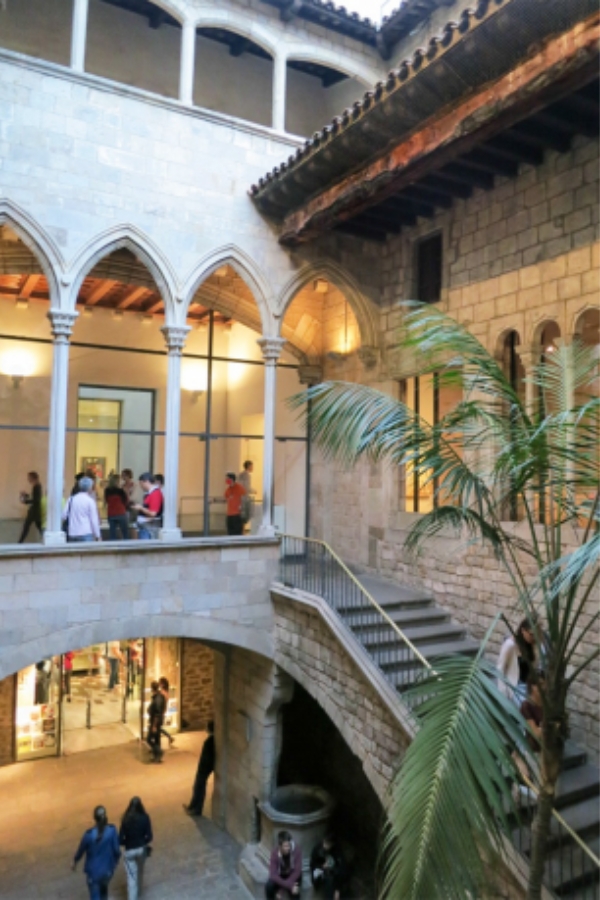
While technically just outside the Gothic Quarter proper in El Born, the Picasso Museum chronicles Pablo Picasso’s formative Barcelona years. The museum occupies five adjoining medieval palaces on Carrer Montcada, where architecture rivals the art collection in historical significance.
The permanent collection focuses primarily on Picasso’s early work and Blue Period, offering unparalleled insight into his artistic formation. The “Las Meninas” series—58 paintings reinterpreting Velázquez’s masterpiece—represents the collection’s crown jewel.
Beyond Picasso’s personal connection, the museum illuminates Barcelona’s broader artistic culture during the late 19th and early 20th centuries, when the artist frequented Gothic Quarter cafés like Els Quatre Gats, epicenter of Barcelona’s modernist artistic scene.
Food, Markets, and Local Life
La Boqueria Market
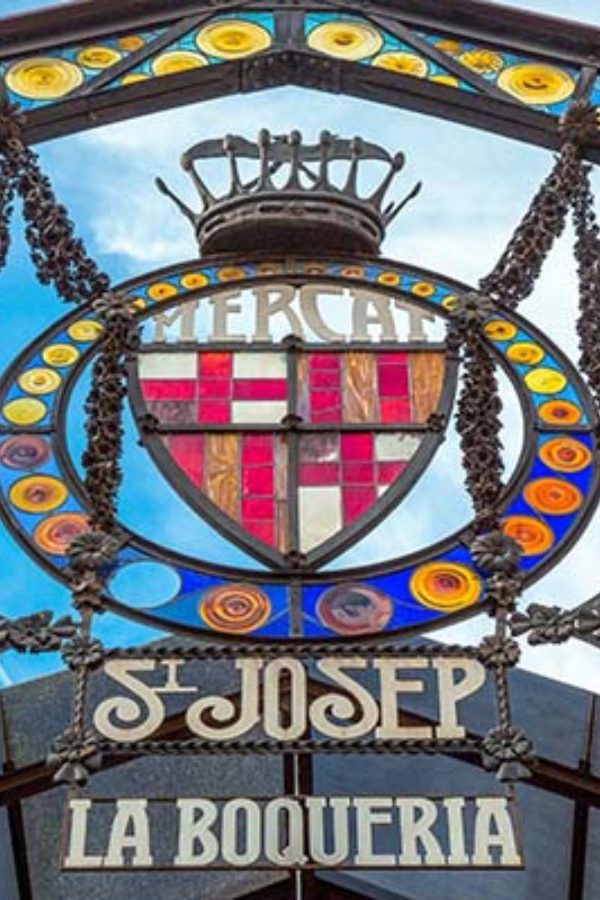
La Boqueria, Barcelona’s famous central market, sits just outside the Gothic Quarter on La Rambla but remains essential to the neighborhood’s food culture. The market occupies a site with commercial history stretching to medieval times, though the current structure dates from the 1840s.
Entering from La Rambla plunges visitors into sensory overload—elaborate tropical fruit displays, fresh juices, and photogenic stalls designed for Instagram appeal. Venture deeper to discover the authentic working market with extraordinary fish and seafood, meat, and seasonal produce that feeds Barcelona’s restaurants and discerning home cooks.
Several counter-style bars serve supremely fresh dishes based on market ingredients. Pinotxo Bar has achieved legendary status, with traditional Catalan market food representing Barcelona’s comfort cooking at its finest.
Bars, Cafés, and Tapas
Traditional Barcelona bars follow distinctive patterns—morning coffee, mid-morning almuerzo (substantial snack), lunch from 1-4 PM, evening vermut or cerveza with tapas, and dinner service from 9 PM onward.
Authentic neighborhood bars feature minimal decor, fluorescent lighting, and zero tourist concessions. These places serve local clientele with reasonable pricing. El Xampanyet in nearby El Born exemplifies traditional bar culture, maintaining original 1920s character with excellent basic tapas and house cava.
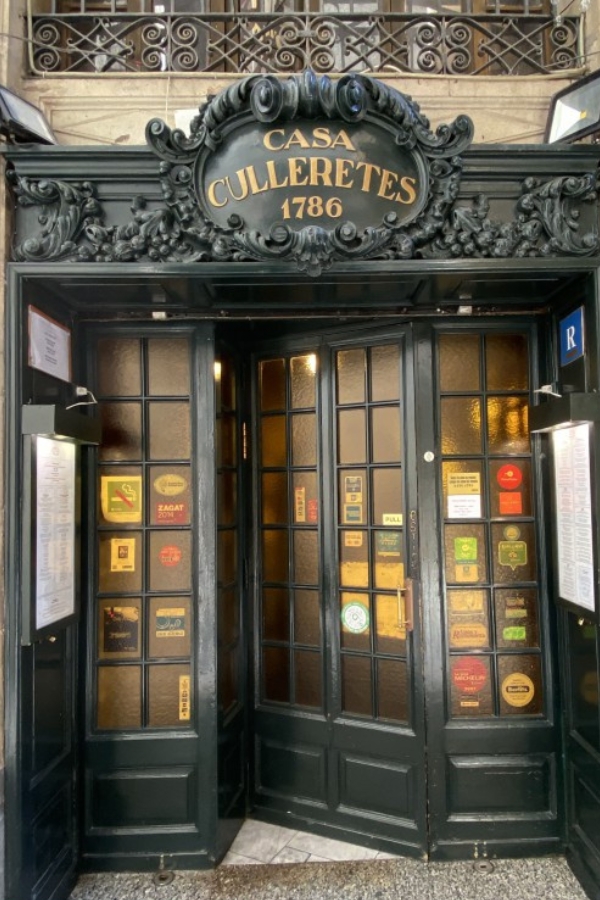
For traditional Catalan cuisine, Can Culleretes claims to be Barcelona’s oldest restaurant (established 1786), maintaining traditional home cooking in settings filled with historic photographs and ceramics.
Wine bars range from traditional bodegas serving simple Catalan wines to sophisticated establishments offering extensive selections. Following local rhythms—late breakfasts, substantial lunches, evening tapas, late dinners—provides both better food experiences and glimpses into authentic Barcelona life.
Practical Visitor Information
Walking Tours
Exploring the Gothic Quarter on foot represents the only practical approach to experiencing this pedestrian-oriented neighborhood. Self-guided routes offer maximum flexibility—a comprehensive walk might begin at Plaça Catalunya, proceed to the cathedral, explore El Call, visit Plaça Sant Jaume and Plaça del Rei, and conclude at Plaça Reial.
Organized walking tours provide structured experiences with knowledgeable guides, typically lasting 2-3 hours. Free walking tours operate on a tips-based model (expect €10-15 per person), while specialized thematic tours focus on Jewish heritage, Gothic architecture, food culture, or photography.
Morning departures offer advantages—cooler temperatures, better light, fewer crowds, and fresher energy. Evening tours provide different atmospheric experiences as the neighborhood transforms under streetlights.
Safety and Accessibility
The Gothic Quarter maintains good safety standards, though pickpocketing represents the most common problem, particularly around the cathedral, La Rambla, and Plaça Reial. Use cross-body bags with zippers, avoid back pockets for valuables, and stay alert in crowds.
Accessibility presents challenges in this medieval neighborhood. Narrow streets, uneven cobblestones, frequent stairs, and historic buildings without elevators create obstacles for visitors with mobility limitations. Major landmarks including the cathedral have implemented accessibility improvements where feasible, and specialized services like Accessible Barcelona Tours offer adapted experiences.
Summer heat (June-August) can make walking uncomfortable, with temperatures exceeding 30°C (86°F). Morning and evening explorations avoid peak heat. Visiting during shoulder seasons (April-May, September-October) provides comfortable experiences with pleasant weather and manageable crowds.
Where to Stay
Staying within the Gothic Quarter places you at the heart of Barcelona’s historic offerings. Luxury hotels like Mercer Hotel Barcelona occupy medieval buildings with Roman wall fragments incorporated into their design. Mid-range hotels and guesthouses offer excellent value in renovated historic buildings maintaining period character.
Budget travelers find numerous hostels ranging from party-oriented social hostels to quieter establishments. Apartment rentals provide self-catering options, though Barcelona has strict regulations on short-term rentals—ensure any property operates legally.
When selecting accommodations, consider location carefully. Properties near Plaça Reial or La Rambla experience nighttime noise that light sleepers may find intolerable. Streets in El Call or around the cathedral tend toward quieter atmospheres. Confirm essential amenities like elevators and air conditioning, as old buildings often feature charming architectural details but may lack modern conveniences.
Neighboring Districts Worth Exploring
El Born or La Ribera
Directly east of the Gothic Quarter across Via Laietana, El Born developed during the same medieval period and features comparable architecture. Santa Maria del Mar basilica (1329-1383) represents Catalan Gothic at its purest—completed relatively quickly with unified vision, creating remarkable architectural harmony. The soaring interior, supported by slender octagonal columns, offers a different but equally impressive Gothic experience than the cathedral.
El Born’s streets attract visitors seeking restaurants, bars, and boutiques in historic settings. The El Born Cultural Centre displays archaeological remains from 1714, when Barcelona fell during the War of Spanish Succession—a painful historical wound in Catalan memory.
El Raval
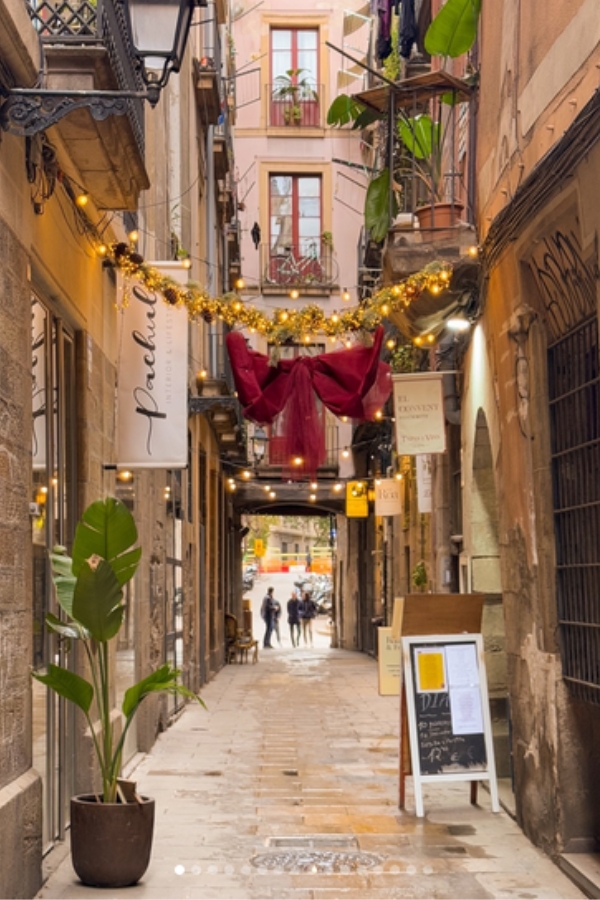
West of the Gothic Quarter across La Rambla, El Raval presents grittier, more multicultural character. The neighborhood houses MACBA (Barcelona Museum of Contemporary Art) and CCCB (Centre of Contemporary Culture), establishing El Raval as a contemporary arts hub contrasting with the Gothic Quarter’s historical focus.
Medieval heritage includes the Hospital de la Santa Creu, a Gothic hospital complex now housing the Biblioteca de Catalunya. Its peaceful courtyard with orange trees offers tranquil refuge, while the library maintains Gothic architectural character within a modern research facility.
These neighboring districts remind us that the Gothic Quarter forms part of a larger medieval urban fabric, with artificial boundaries created by later urban interventions separating what were once continuous neighborhoods.
For visitors looking to venture further afield, our comprehensive Barcelona Neighborhood Guide reveals how each district contributes its own distinct character, architecture, and cultural identity to this endlessly fascinating city.
Special Considerations and Responsible Tourism
The Gothic Quarter faces genuine challenges. Tourism saturation strains infrastructure and threatens to transform the neighborhood into a theme park rather than authentic community. Rising rents push out long-time residents and traditional businesses. These problems don’t negate the area’s extraordinary appeal, but conscientious visitors should travel thoughtfully.
Support local businesses rather than international chains. Respect residential character—remember real people call these streets home. Stay aware of surroundings and practice sustainable tourism: walk rather than use vehicles, carry reusable water bottles, choose accommodations with sustainability commitments, and support businesses with ethical practices.
Climate change and mass tourism’s environmental impacts demand consideration. Minimizing negative impacts while maximizing positive economic contributions helps ensure the Gothic Quarter remains vibrant for future generations.
Summing Up…
Barcelona’s Gothic Quarter stands as one of Europe’s most remarkable historic neighborhoods—a living museum where Roman foundations support medieval palaces, where Gothic cathedrals overlook bustling plazas, and where centuries of history remain vibrantly present in daily life.
The things to do in Gothic Quarter extend far beyond checking famous landmarks off lists. Yes, visiting the cathedral, exploring the royal palace, and walking beneath the Bishop’s Bridge rank among essential experiences. But equally valuable are unplanned discoveries—stumbling upon hidden courtyards, hearing traditional music from tavern doorways, watching elderly residents chat on sun-dappled plaza benches, or simply sitting with coffee while observing how centuries of history continue unfolding.
Whether you spend a few hours on a quick walking tour or several days thoroughly exploring every corner, the Gothic Quarter offers experiences available nowhere else on earth. This dense concentration of two millennia of history, this successful integration of preservation and living urban function, this remarkably atmospheric collection of streets and buildings—all combine to create something genuinely special.
As you walk streets where Romans marched, medieval merchants traded, and artists found inspiration, you’re not merely observing history but participating in the Gothic Quarter’s ongoing story. The neighborhood ultimately transcends any guidebook’s ability to fully capture its essence. Words and photographs hint at its magic, but only direct experience—feeling cool shadows of narrow medieval streets, hearing footsteps echo off ancient stones, tasting traditional flavors, smelling incense from dim churches—can truly convey what makes this neighborhood extraordinary.
This remarkable neighborhood has survived Roman decline, medieval plagues, civil war, and relentless modernization. It endures not as a fossilized relic but as a living, evolving community where past and present coexist. May your explorations of the Gothic Quarter prove as enriching and memorable as this extraordinary neighborhood deserves.